HomeArticlesCan I Get a Bridging Loan with Bad Credit in the UK?
Can I Get a Bridging Loan with Bad Credit in the UK?
August 15, 2026 9 Min Read
Bridging Finance
✅ Can I get a bridging loan with bad credit?
Yes - often. Bridging is secured lending, so specialist lenders weigh the property, the loan-to-value, and above all the exit strategy more heavily than historic credit issues. CCJs, defaults, and past arrears narrow the lender pool rather than close it - the job is reaching the lenders comfortable with your circumstances. Money Pilot places adverse-credit cases across 200+ lenders at zero broker fees - FCA regulated (FRN: 968705).
If you've ever typed this question into Google at two o'clock in the morning, you're not alone. For many borrowers, bad credit feels like a door slamming shut. A missed payment. A County Court Judgment. A historic default. Suddenly it feels as though every lender in Britain has politely shown you the exit.
The good news is that bridging finance doesn't always work the same way as a traditional mortgage. In fact, many borrowers are surprised by just how differently specialist lenders look at bad credit.
Bank of England held base rate at 4.25% in June 2026 - waiting for inflation to cool.
73% of UK SMEs expect to grow in the next 12 months - confidence remains strong.
The short answer
Yes. You can often get a bridging loan with bad credit. Notice the word often, not always. But far more frequently than many people expect.
That's because bridging lenders tend to ask a different question. Instead of focusing only on what's happened in the past, they're also interested in what's happening now.
Why bridging lenders think differently
Imagine two borrowers. The first has an impeccable credit score but no obvious way of repaying the loan. The second had financial difficulties three years ago, has since recovered and has a clear exit strategy backed by valuable property. Which one would you rather lend to?
Many specialist lenders choose the second. That surprises people, until they remember what bridging finance is designed to do. It's secured lending. The property and the exit strategy usually carry more weight than a perfect credit report.
What counts as bad credit?
Bad credit isn't one thing. It covers a wide range of circumstances, for example:
Missed payments
Defaults
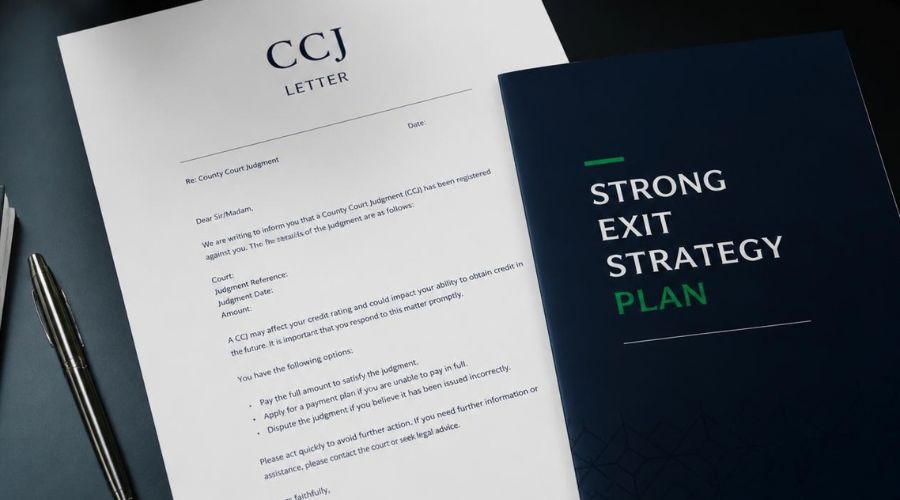
County Court Judgments (CCJs)
Debt Management Plans
Individual Voluntary Arrangements (IVAs)
Historic bankruptcy
Mortgage arrears
Some issues happened last month. Others happened ten years ago. Lenders don't treat them all the same.
Will bad credit affect the interest rate?
Possibly. Like most forms of lending, greater risk can mean higher pricing. But bad credit is only one part of the picture. Lenders will also consider:
The property's value
How much you're borrowing
Your loan-to-value
Your exit strategy
The type of property
How recent the credit issues are
Why they happened
A borrower with historic credit issues and a strong application may receive far more competitive terms than someone with excellent credit but a weak repayment plan.
Should you tell the lender?
Absolutely. This isn't the sort of thing that stays hidden for long. Credit checks exist for a reason. Experienced brokers would much rather know about a default during the first conversation than discover it halfway through the application.
In fact, honesty often saves time. Once everyone understands the circumstances, the application can be directed towards lenders who are comfortable with that level of risk.
Does every lender accept bad credit?
No. And that's perfectly normal. Every lender has its own criteria. Some have very little appetite for adverse credit. Others specialise in exactly those types of cases.
That's one of the biggest advantages of using a broker with access to a wide panel of lenders. You're not relying on one opinion. You're benefiting from dozens of different lending policies.
Can recent bad credit still be accepted?
Sometimes. A recent missed payment doesn't automatically end the conversation. Neither does a recent default. The lender will usually want to understand what happened. Was it a one-off event? Was it caused by illness? A business issue? A delayed property sale?
Context matters. Finance rarely fits neatly into tick boxes.
The mistake people often make
Many borrowers assume they'll be declined. So they never apply. Or worse, they apply to the wrong lender, receive a rejection and conclude that nobody will help.
That's rather like being turned away from one restaurant and deciding the whole of London has stopped serving dinner. Different lenders have different appetites. Finding the right one is often more important than having a flawless credit history.
How can you improve your chances?
Simple things make a difference. Be upfront about your circumstances. Provide documents quickly. Have a realistic exit strategy. Borrow only what you genuinely need. And work with someone who understands which lenders are likely to consider your application before it's submitted.
Preparation won't erase bad credit. It can make the application considerably stronger.
The bottom line
Bad credit doesn't automatically prevent you from getting a bridging loan in the UK. Far from it. Specialist lenders look at the whole picture. Yes, your credit history matters. But so do the property, the amount you're borrowing and, perhaps most importantly, how you intend to repay the loan.
Because in bridging finance, yesterday's problems aren't always the deciding factor.
Lenders are often much more interested in whether tomorrow's plan makes sense.
FAQ
Bridging loan with bad credit uk - your questions answered
Everything from missed payments and defaults to CCJs, debt management plans, IVAs, historic bankruptcy, and mortgage arrears - and lenders treat a ten-year-old issue very differently from last month's. Recency, severity, and context all matter.
Possibly - but it is one factor among many. A borrower with historic issues, a sensible LTV, and a strong evidenced exit can out-price someone with clean credit and a weak repayment plan. The whole application sets the rate.
Always - checks surface everything anyway, and early honesty lets the application go straight to lenders comfortable with the circumstances instead of dying at the wrong one. It saves weeks and often saves the deal.
Sometimes - recency does not automatically end the conversation. Lenders want the story: a one-off event, an illness, a business issue, a delayed sale? Context plus a strong exit keeps recent-adverse cases fundable.
No - one lender's decline reflects one lender's criteria. Appetite for adverse credit varies enormously across the market, which is precisely why broker placement beats serial applications that scar your file further.
We match your circumstances to the lenders who genuinely accept them before anything is submitted - full market, zero broker fees, FCA regulated (FRN: 968705). Call 020 4634 8617 or start on our bridging finance page.
Disclosure: Money Pilot Ltd (FRN: 968705) is an Appointed Representative of Yellow Stone Finance Group Ltd which is authorised and regulated by the Financial Conduct Authority (FRN: 814533). Yellow Stone Finance Group Ltd is a credit broker not a lender. Money Pilot Ltd is Registered in England and Wales No: 13621432. You should always make sure you are able to afford any repayments as late or missed payments can affect your credit rating and access to future finance.
YOUR PROPERTY MAY BE REPOSSESSED IF YOU DO NOT KEEP UP REPAYMENTS ON A MORTGAGE OR ANY OTHER DEBT SECURED ON IT.
What does Money Pilot do?
Our smart-search engine analyses your requirements — amount, term, business type, and credit profile — then instantly matches them against our panel of 200+ lenders.
Yes — comparing finance options and getting matched with lenders through Money Pilot is completely free, with no obligation to proceed.
Business finance, property finance, bridging loans, commercial mortgages and more — our panel of 200+ lenders covers most funding needs.
Often, yes. Many of our lenders specialise in cases with adverse credit history — our matching engine will surface the right options for your circumstances.
Indicative matches are instant. Full lender decisions typically follow within 24-48 hours, depending on the complexity of your enquiry.
You can complete the whole journey online, but our team is always on hand if you would rather talk it through with a specialist.
Yes, we work with introducing brokers under standard commission terms — get in touch with our team for details.
Three simple steps to get you the funding you need, faster.
1
Submit Enquiry
Complete a fast but in-depth overview of your finance requirements to allow our powerful matching engine to source the right lenders for you.
2
Connect
Engage directly with lenders in real-time, with our friendly advisors always on hand to guide you through every step of the funding journey.
3
Apply
Track your enquiry in real-time and seamlessly move to application — all in one place — getting you to your funds faster and with less hassle.
Get in touch with our team
Get a Quick Quote
Get in touch with our team
Contact Us
Telephone: 02046348617
Email: info@money-pilot.co.uk
Unit 1, Verney House 1B Hollywood Road, London SW10 9HS
Opening Times: 9am - 6pm, Mon - Fri
Company Registration No. 13621432
We use cookies to improve your experience, provide live support, and analyse site traffic. By clicking "Accept All", you consent to our use of cookies.
Cookie Preferences
Select which cookies you want to accept. Essential cookies cannot be disabled.
Required for the website to function securely and save your preferences.
Enables our live chat support (HubSpot) and remembers your session state.
Allows us to measure traffic and see how visitors use the site via Google Analytics.
Used to deliver and track personalized advertisements via Google Ads and Meta.