✅ Can I convert a commercial property to residential without planning permission?
Often, yes - under Class MA permitted development rights, buildings in Commercial, Business and Service use (Class E: offices, shops, gyms, surgeries and more) can convert to residential (C3) without a full planning application. You still need prior approval - the council checks specific matters like transport, flooding, noise, contamination and natural light - and exclusions apply (conservation-area restrictions, Article 4 areas, listed buildings). Prior approval is a defined, narrower test than full planning - which is exactly why lenders like the route. Money Pilot funds the full stack - 200+ lenders, zero broker fees, FCA regulated (FRN: 968705).
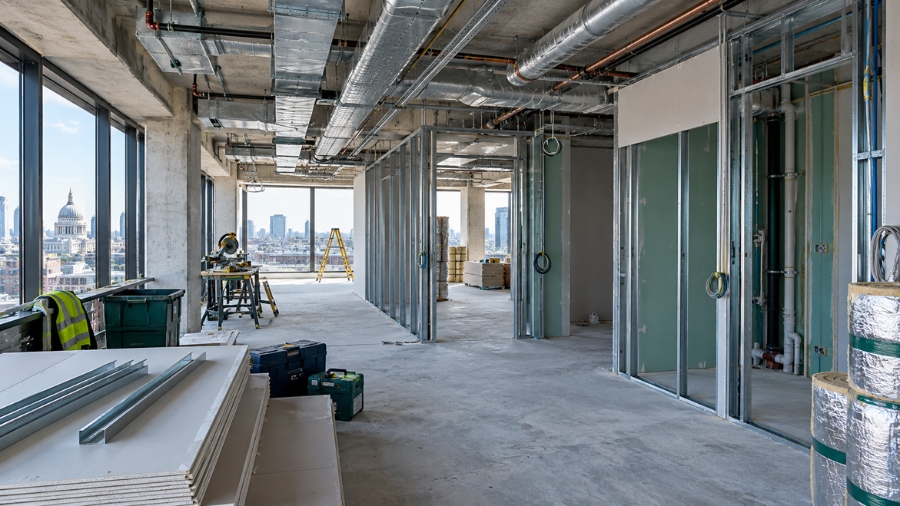
Commercial to residential conversion uk is where two of 2026’s biggest forces collide profitably: a repriced secondary office market nobody wants as offices, and a housing market short of exactly the flats those buildings can become. Class MA permitted development rights are the legal engine - conversion without a full planning application - and the funding stack behind it is now one of the most practised sequences in specialist lending. This is the playbook, from qualifying building to banked exit.
Bank of England held base rate at 4.25% in June 2026 - waiting for inflation to cool.

73% of UK SMEs expect to grow in the next 12 months - confidence remains strong.
Class MA permitted development rules UK - what qualifies in 2026
The class ma permitted development rules uk start with the building’s use: it must sit in Class E - the broad commercial, business and service class that swallowed offices, retail, restaurants, gyms, nurseries and surgeries in 2020. Since the 2024 amendments the route got materially wider: the old floorspace cap and vacancy requirement were removed, so larger and still-occupied buildings can now qualify. The checks that remain:
- Qualifying use and history - Class E use for a continuous period before application; change-of-use gaming gets checked
- Prior approval matters - transport and highways, contamination, flood risk, noise from neighbouring commercial uses, and - the quiet unit-killer - adequate natural light to every habitable room
- Space standards - national minimums apply: a studio that fails 37 sqm is a unit your appraisal never really had
- Where rights don’t run - listed buildings, some conservation-area cases, and anywhere the council has made an Article 4 direction stripping Class MA locally - always the first search, not the last
Prior approval is decided in a defined window against those specific matters only - the council cannot reopen the principle of residential use. That certainty, against the open-ended risk of full planning, is why conversion deals price and fund the way they do.
Conversion cost per square foot UK - budgeting the works honestly
Conversion cost per square foot uk is scheme-specific, but the budgeting bands brokers see across live 2026 appraisals are consistent enough to plan with: straightforward office-to-flat conversions of sound buildings commonly land around £140–£220 per square foot all-in on the works side, with heavier schemes - structural surprises, full services replacement, facade works, higher spec - pushing £250+. Treat these as planning bands, not quotes: the building’s services strategy (one office boiler becoming twelve flat systems), fire compartmentation, and acoustic separation are where conversion budgets genuinely live. Two disciplines keep appraisals honest - a 10 - 15% contingency (conversions hide surprises inside walls you have not opened; our contingency guide covers lender expectations) and pricing the exit spec, not the show-home dream.
The Class MA appraisal - built exit-first
Every fundable conversion appraisal runs backwards: start from what the finished flats sell or let for, then prove the route there.
The five lines that decide it:
- GDV from residential comps - real sold prices for the unit sizes you are actually creating, not the best flat in town
- Works + contingency - the per-square-foot band stress-tested, 10–15% contingency stated, services strategy costed
- Prior approval on the critical path - application timing, natural-light design check on every unit, Article 4 search done on day one
- Finance costs carried honestly - bridge interest, development facility fees and roll-up inside the appraisal from the start
- Exit named, not assumed - unit sales, or refinance onto BTL/portfolio terms and hold: two different lenders, two different appraisals
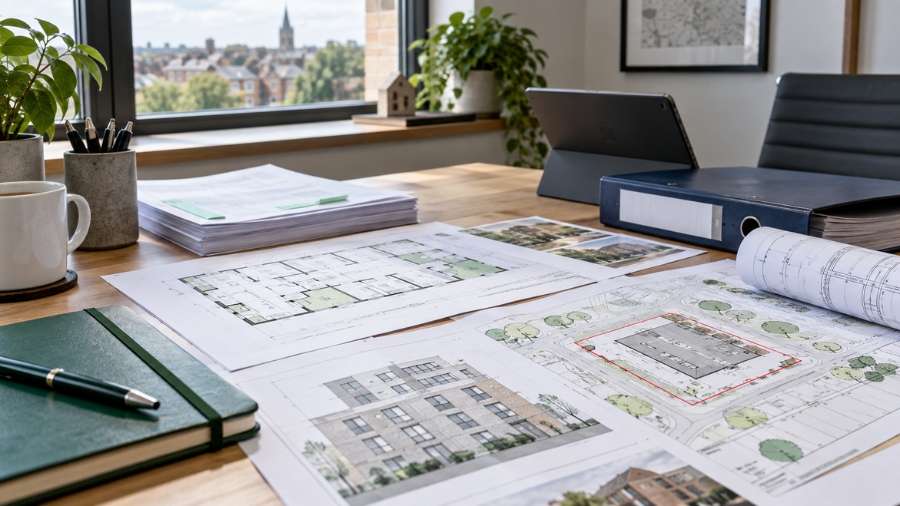
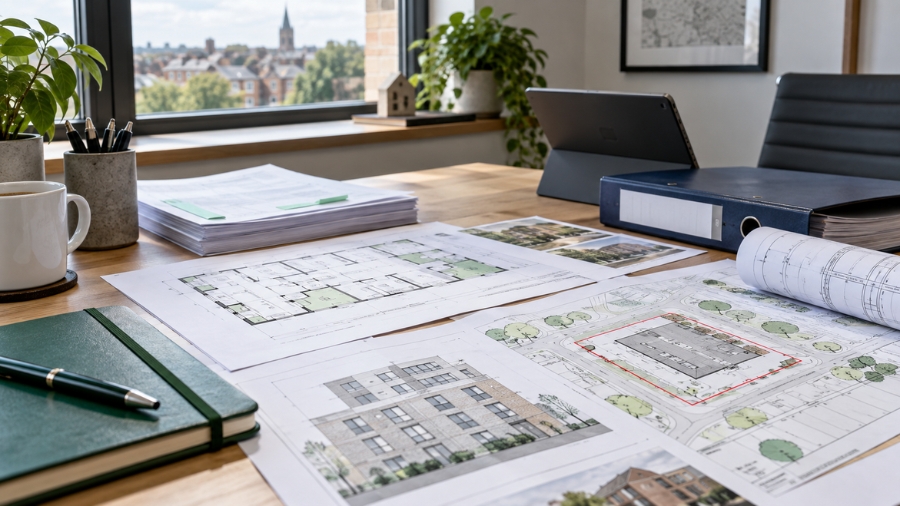
Class MA permitted development rules UK — prior approval matters, space standards, and the Article 4 check that comes first.
Office conversion finance UK - the three-stage funding stack
Office conversion finance uk is a sequence, not a product. Stage one: acquire - usually on commercial bridging, because the best buildings sell before prior approval is in hand and bridging moves at vendor speed. Stage two: build - onto development finance once prior approval lands, with staged drawdowns funding the works against monitored progress. Stage three: exit - unit sales, or where the plan is to hold, a refinance onto investment terms; where sales need breathing room, development exit finance replaces expensive development money at practical completion. Lender appetite for Class MA schemes is genuinely strong in 2026 - the planning certainty de-risks the asset they are lending into existence - and the wider market forces behind the trade (secondary office repricing, the conversion pipeline) are mapped in our commercial property outlook companion guide.
Who this suits - and the honest warnings
Class MA conversions reward buyers who underwrite like developers: the margin is made at purchase (buildings bought at office values, exited at residential values), protected by cost discipline, and realised by an exit that was named before the offer went in. First projects are fundable - lenders back first-timers with strong professional teams and sensible schemes - but the route punishes optimism on natural light, services budgets and sales rates. Run the Article 4 search before falling in love with any building, and let the appraisal kill the deal early if it is going to die at all.