HomeArticlesHow Much Does a Bridging Loan Cost in the UK?
How Much Does a Bridging Loan Cost in the UK?
August 14, 2026 9 Min Read
Rates & Costs
✅ How much does a bridging loan cost in the UK?
Interest is charged monthly - often starting around 0.45% per month for the strongest cases and exceeding 1% for complex ones - plus fees: arrangement (typically ~2%), valuation, legal, and sometimes exit or admin fees. LTV, exit strength, property type, and lender appetite set your price. The cheapest headline rate is not always the cheapest loan. Money Pilot compares the whole market at zero broker fees - FCA regulated (FRN: 968705).
Let's get the obvious question out of the way. Bridging loans are more expensive than traditional mortgages. Nobody in the industry pretends otherwise. But that's a little like pointing out that a taxi costs more than a bus. Of course it does. One turns up when you need it, takes you exactly where you're going and doesn't stop 37 times on the way.
Bridging finance isn't designed to be the cheapest form of borrowing. It's designed to solve expensive problems quickly. Sometimes, missing an auction purchase or losing a property chain costs far more than the loan itself. So what does a bridging loan actually cost?
Bank of England held base rate at 4.25% in June 2026 - waiting for inflation to cool.
73% of UK SMEs expect to grow in the next 12 months - confidence remains strong.
Bridging loan interest rates
Interest is usually charged monthly rather than annually. As a rough guide, rates often start from around 0.45% per month for the strongest cases and can exceed 1% per month for more complex applications.
Where your rate falls depends on several factors, including:
The property's value
How much you're borrowing
Your loan-to-value (LTV)
The type of property
Your exit strategy
Your previous experience
The lender's appetite for that particular case
It's tempting to focus purely on the headline rate. The experienced borrowers rarely do.
The cheapest loan isn't always the cheapest loan
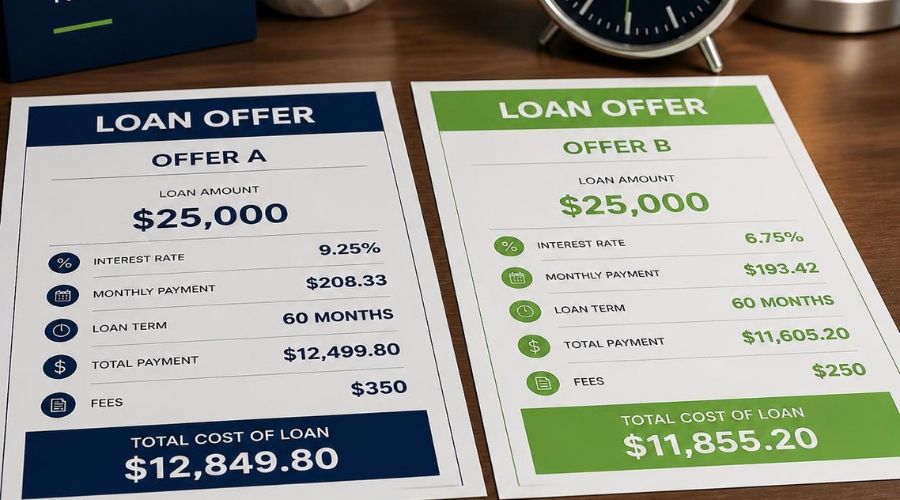
Imagine someone offers you two bridging loans. The first charges a lower interest rate but takes six weeks to complete. The second costs slightly more but completes in seven days.
If you're buying at auction, one gets you the property. The other gets you a refund of your disappointment. Price only tells part of the story. Speed has value. Certainty has value.
Flexibility has value. Sometimes they're worth paying for.
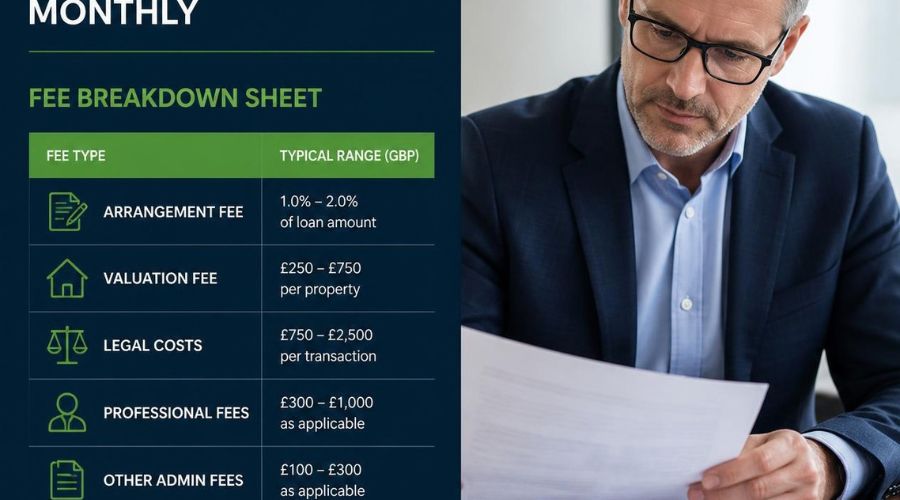
What fees should you expect?
Interest isn't the only cost. Depending on the lender and the complexity of the transaction,
you may also pay:
Arrangement fees
Valuation fees
Legal fees
Broker fees, where applicable
Administration fees
Exit fees with some lenders
Not every lender charges every fee. Some include certain costs. Others don't. That's why comparing one loan against another isn't always as straightforward as comparing two percentages.
What's an arrangement fee?
Most bridging lenders charge an arrangement fee. It's typically around 2% of the loan amount, although this varies between lenders and products. Some borrowers pay it upfront. Others choose to add it to the loan. Adding it can help preserve cash flow, although it also increases the amount being borrowed.
Do you pay monthly?
Sometimes. Sometimes not. One of the more attractive features of bridging finance is its flexibility. Depending on the lender, you may have several options. You can:
Pay interest every month
Roll the interest into the loan
Retain the interest at the outset so nothing is due each month
The right option depends entirely on your circumstances. For example, someone renovating a property may have little interest in making monthly repayments while builders are still on site.
What affects the cost?
Lenders look at risk. The lower the perceived risk, the more competitive the pricing tends to be. Things that can influence the overall cost include:
A lower loan-to-value
A stronger exit strategy
Better quality security
Previous property experience
Straightforward legal work
Simpler ownership structures
None of these guarantees a lower rate. They simply help build a stronger application.
Can you get a cheaper bridging loan?
Quite often, yes. Not because someone has a secret discount code. Because different lenders view the same case differently. One lender may see a straightforward refurbishment project. Another may decide it's outside their appetite altogether.
That's why experienced brokers spend so much time matching borrowers with lenders instead of simply chasing the lowest advertised rate. The best deal is usually the one that's priced competitively and has a realistic chance of completing.
A quick example
Let's say you're borrowing £300,000 to purchase an investment property. The interest rate is 0.65% per month. The arrangement fee is 2%. At first glance, another lender offering 0.58% might seem like the obvious winner.
But if the second lender needs another three weeks to complete and you lose the property, the saving suddenly looks rather academic. That's why experienced investors tend to ask one question before any other: "Will this lender actually get the deal over the line?"
Is bridging finance worth the cost?
Sometimes it's the most expensive money you'll ever borrow. Sometimes it's the cheapest. That sounds contradictory until you think about it.
If a bridging loan allows you to secure a property worth £100,000 more than you paid for it, complete a refurbishment that unlocks significant value or stop a chain from collapsing, the cost of the loan becomes part of the investment. Like any financial product, it should be judged against the outcome it helps you achieve, not simply the interest rate printed on the first page.
The bottom line
Bridging loans are built for speed, flexibility and opportunity. They're rarely the cheapest form of borrowing. They're not supposed to be.
The real cost of a bridging loan isn't just the interest rate. It's the complete picture: the lender, the fees, the speed, the certainty, and perhaps most importantly, whether the finance helps you achieve something that wouldn't have been possible otherwise.
Because in property, the biggest cost isn't always paying a little more. Quite often, it's missing the opportunity altogether.
FAQ
How much does a bridging loan cost uk - your questions answered
Roughly 0.45% per month upward for strong, low-LTV cases with clean exits, rising past 1% monthly for complex ones. Your LTV, the property, your experience, and the exit strategy move the price more than negotiation does.
A lender fee of typically around 2% of the loan, paid upfront or added to the borrowing. Adding it preserves cash flow but increases the loan and the interest charged on it - model both before choosing.
Not necessarily - bridging offers three structures: pay interest monthly, roll it up into the loan, or retain it at the outset so nothing is due during the term. Renovators and auction buyers commonly choose rolled-up or retained.
Because a cheaper lender who completes in six weeks loses you the auction a dearer one wins in seven days. Speed, certainty, and total fees decide the real cost - judge the complete package against the outcome it delivers.
Lower LTV, a stronger evidenced exit, better security, and simpler structures all improve pricing - and different lenders genuinely price the same case differently, which is why whole-market comparison beats rate-chasing.
No - zero broker fees, across 200+ lenders, FCA regulated (FRN: 968705). The full pricing context sits on our bridging finance page and in our bridging loan costs guide. Call 020 4634 8617.
Disclosure: Money Pilot Ltd (FRN: 968705) is an Appointed Representative of Yellow Stone Finance Group Ltd which is authorised and regulated by the Financial Conduct Authority (FRN: 814533). Yellow Stone Finance Group Ltd is a credit broker not a lender. Money Pilot Ltd is Registered in England and Wales No: 13621432. You should always make sure you are able to afford any repayments as late or missed payments can affect your credit rating and access to future finance.
YOUR PROPERTY MAY BE REPOSSESSED IF YOU DO NOT KEEP UP REPAYMENTS ON A MORTGAGE OR ANY OTHER DEBT SECURED ON IT.
What does Money Pilot do?
Our smart-search engine analyses your requirements — amount, term, business type, and credit profile — then instantly matches them against our panel of 200+ lenders.
Yes — comparing finance options and getting matched with lenders through Money Pilot is completely free, with no obligation to proceed.
Business finance, property finance, bridging loans, commercial mortgages and more — our panel of 200+ lenders covers most funding needs.
Often, yes. Many of our lenders specialise in cases with adverse credit history — our matching engine will surface the right options for your circumstances.
Indicative matches are instant. Full lender decisions typically follow within 24-48 hours, depending on the complexity of your enquiry.
You can complete the whole journey online, but our team is always on hand if you would rather talk it through with a specialist.
Yes, we work with introducing brokers under standard commission terms — get in touch with our team for details.
Three simple steps to get you the funding you need, faster.
1
Submit Enquiry
Complete a fast but in-depth overview of your finance requirements to allow our powerful matching engine to source the right lenders for you.
2
Connect
Engage directly with lenders in real-time, with our friendly advisors always on hand to guide you through every step of the funding journey.
3
Apply
Track your enquiry in real-time and seamlessly move to application — all in one place — getting you to your funds faster and with less hassle.
Get in touch with our team
Get a Quick Quote
Get in touch with our team
Contact Us
Telephone: 02046348617
Email: info@money-pilot.co.uk
Unit 1, Verney House 1B Hollywood Road, London SW10 9HS
Opening Times: 9am - 6pm, Mon - Fri
Company Registration No. 13621432
We use cookies to improve your experience, provide live support, and analyse site traffic. By clicking "Accept All", you consent to our use of cookies.
Cookie Preferences
Select which cookies you want to accept. Essential cookies cannot be disabled.
Required for the website to function securely and save your preferences.
Enables our live chat support (HubSpot) and remembers your session state.
Allows us to measure traffic and see how visitors use the site via Google Analytics.
Used to deliver and track personalized advertisements via Google Ads and Meta.