✅ How much does invoice finance cost for a UK SME?
For most UK SMEs the all-in cost lands between 1% and 2.4% of annual turnover, built from two separate charges: a service charge (typically 0.1%–3% of turnover — discounting at the low end, factoring higher because credit control is bundled in) and a discount charge — effectively interest on the cash advanced, typically 1.5%–6% over base, roughly 5.25%–9.75% a year on drawn funds. On £100,000 of invoices that can mean roughly £850–£4,250 a month, moved by turnover, debtor quality, payment terms and sector. Money Pilot compares facilities across 200+ lenders at zero broker fees — FCA regulated (FRN: 968705).
Invoice finance pricing rarely comes as a single, clean percentage. It’s built from two separate charges, layered together, and the total can look quite different depending on your turnover, your customers, and whether you’ve chosen factoring or discounting. Once you understand the two components separately, the overall cost becomes considerably easier to judge.

Bank of England held base rate at 4.25% in June 2026 - waiting for inflation to cool.
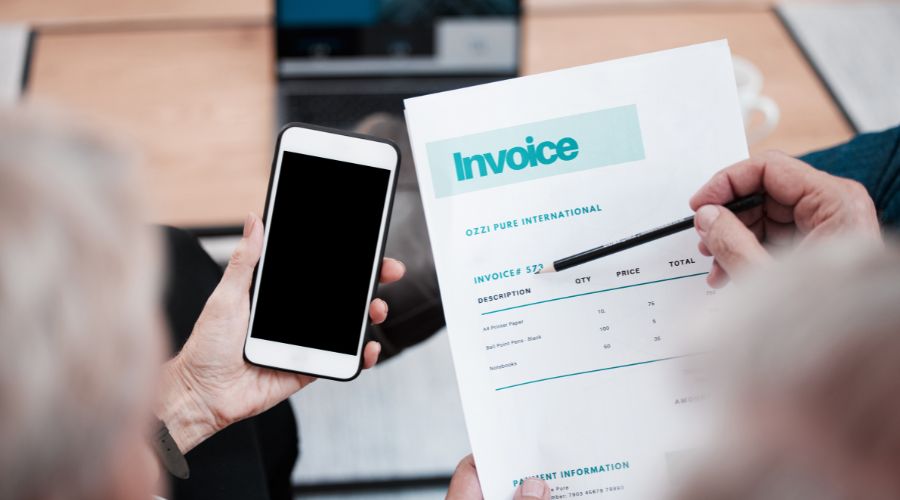
73% of UK SMEs expect to grow in the next 12 months - confidence remains strong.
The two components of invoice finance cost
The service charge
Covers administration and, for factoring specifically, credit control and collections. In 2026, service charges typically range from 0.1% to 3% of turnover, with confidential invoice discounting sitting at the lower end, often 0.1%-0.5%, since you retain your own credit control, while factoring runs higher, commonly 0.5%-2.5% of turnover, reflecting the additional collections work the provider takes on.
The discount charge
This is effectively interest, charged on the cash actually advanced against your invoices, expressed as a margin over a base rate, typically the Bank of England base rate or SONIA. Typical discount margins range from around 1.5% to 6% above base, working out to roughly 5.25%-9.75% per annum on drawn funds, depending on your business’s risk profile and the strength of your customer base.
What does this look like as a total, all-in cost?
For most UK SMEs, the combined cost of invoice finance, service charge plus discount charge together, typically falls somewhere between 1% and 2.4% of annual turnover. On £100,000 of invoices, that can translate to a monthly cost somewhere in the region of £850-£4,250, depending heavily on your specific facility, turnover level, and debtor quality.
Why does the cost vary so much between businesses?
A handful of factors do most of the work in determining where your specific pricing lands:
- Turnover volume. Larger facilities typically attract lower percentage rates, since the provider’s fixed setup costs are spread across a higher volume.
- Debtor quality. Customers with strong, blue-chip, or government-backed creditworthiness generally support lower pricing than customers with weaker credit profiles.
- Payment terms. Longer payment terms, 60-90 days rather than 30, increase the discount charge element, since funds are drawn down for longer.
- Sector. Construction and haulage businesses often see higher rates (roughly 8%-9.5%) than recruitment or professional services (roughly 6.5%-7.5%), reflecting different risk profiles across industries.
- Factoring vs discounting. Factoring’s bundled credit control service consistently costs more than discounting’s lower service charge, since you’re paying for the provider to manage collections rather than doing it yourself.
Are there any additional or hidden costs to watch for?
Yes, worth checking specifically before signing anything:
- Arrangement fees, typically 1%-2% of the facility, covering setup, audits, and documentation
- Minimum usage charges, which can apply even if you draw down less than expected
- Exit fees or penalties, if you leave the facility before an agreed term
- Setup or audit fees, which can add several hundred to a couple of thousand pounds to the total cost
Always ask for an itemised breakdown rather than a single bundled “total cost” figure, since some providers combine the discount rate and service charge into one number that can obscure exactly what you’re paying for.
Why is discounting generally cheaper than factoring?
Because the service charge reflects the amount of work the provider is actually doing. Factoring includes credit control and collections as part of the service, work that discounting leaves entirely with you. If your business has strong internal credit control capability and turnover above roughly £500,000, switching from factoring to discounting is often one of the more straightforward ways to reduce overall cost.
How can a business actually reduce the cost of invoice finance?
A few practical levers genuinely help:
- Increasing turnover volume, since higher volumes typically unlock lower percentage rates
- Improving the overall quality of your debtor book, stronger customers generally mean lower risk pricing
- Reducing payment terms where possible, since shorter terms mean less discount charge accrues
- Comparing multiple providers and using competing quotes as leverage
- Moving from factoring to discounting once your credit control capability and turnover support it
The mistake businesses often make
Some businesses compare invoice finance providers purely on the headline discount rate, without properly accounting for the service charge, arrangement fees, or minimum usage charges that sit alongside it. A provider quoting an attractive discount margin can still end up more expensive overall once the full fee structure is added together.
The bottom line
Invoice finance for UK SMEs typically costs somewhere between 1% and 2.4% of annual turnover once the service charge and discount charge are combined, with factoring generally costing more than discounting due to the bundled credit control service. The specific figure depends heavily on your turnover, sector, debtor quality, and payment terms, which is exactly why comparing genuine, itemised quotes across multiple providers matters more than judging a single headline rate. Money Pilot covers provider pricing across the invoice finance market in detail, helping SMEs see how their specific circumstances translate into a real, comparable cost rather than a single advertised number.