HomeArticlesHow Do I Finance a UK Property Auction Purchase?
How Do I Finance a UK Property Auction Purchase?
August 16, 2026 9 Min Read
HMO & Property
✅ How do I finance a property bought at auction?
The hammer creates a binding contract with usually 28 days to complete - so most auction buyers use bridging finance: pay the 10% deposit on the day, arrange the balance through a bridging lender, complete within the deadline, then repay by refinancing or selling once the property is ready. The strongest buyers arrange finance before bidding. Money Pilot arranges auction bridging across 200+ lenders at zero broker fees - FCA regulated (FRN: 968705).
There's a particular sound that makes experienced property investors sit up straight. It's not the auctioneer's introduction. It's not the rustle of the catalogue. It's the bang of the hammer.
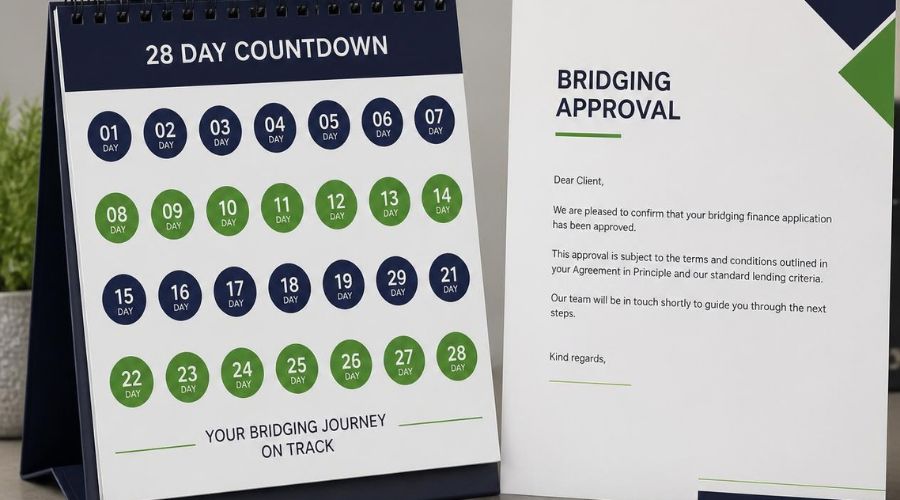
Because from that moment, everything changes. You've just bought a property. Congratulations. You also have a legally binding contract and, in most cases, around 28 days to complete. That countdown starts immediately. Not when your mortgage lender returns your call next Tuesday. Not when your solicitor gets back from holiday. Immediately.
That's exactly why so many auction buyers use bridging finance.
Bank of England held base rate at 4.25% in June 2026 - waiting for inflation to cool.
73% of UK SMEs expect to grow in the next 12 months - confidence remains strong.
Why don't people just use a mortgage?
Sometimes they do. Often they can't. Traditional mortgages are excellent if everything lines up perfectly, but auction purchases rarely do. Properties sold at auction are often:
In need of refurbishment
Uninhabitable
Non-standard construction
Commercial or mixed-use
Purchased under tight completion deadlines
Those aren't impossible for mortgage lenders. They just aren't always quick enough. A bridging loan is built for exactly this sort of situation.
How does auction finance work?
The process is surprisingly straightforward. You successfully bid on the property. You pay the auction deposit, usually 10%, on the day. You then arrange finance for the remaining balance. Once the legal work and valuation are complete, the bridging lender releases the funds and the purchase completes.
Later, once you've renovated the property, sold it or refinanced onto a traditional mortgage, you repay the bridging loan. Simple in principle. Like most things involving property, the detail matters.
Can I arrange finance after I've won the auction?
Yes. But that's a little like buying a parachute after jumping out of the plane. Technically
possible. Not ideal.
The strongest auction buyers arrange finance before they ever enter the auction room. They know how much they can borrow. They understand the likely costs. And they already have a broker ready to move the application forward if their bid is successful. Preparation wins auctions almost as often as money does.
How quickly can auction finance be arranged?
In straightforward cases, bridging finance can often complete within five to fourteen working days. That leaves valuable breathing room before the completion deadline. Leave everything until the day after the auction and those twenty-eight days suddenly feel much shorter than they looked on paper.
What types of auction property can be financed?
Almost every week, auction catalogues contain properties that make traditional mortgage lenders slightly nervous. For example:
Houses without kitchens or bathrooms
Fire-damaged properties
Commercial premises
Mixed-use buildings
Land
Semi-commercial properties
Heavy refurbishment projects
Buy-to-let investments
Specialist bridging lenders see these types of properties every day. What looks unusual to one lender may look perfectly ordinary to another.
What do lenders look for?
Winning the auction is only part of the story. Lenders will also want to understand:
The property's value
How much you're borrowing
Your experience, where relevant
Your exit strategy
How you intend to add value, if applicable
Whether the legal work is straightforward
Notice what's missing. They're not asking whether the kitchen cabinets are fashionable. They're asking whether the deal makes commercial sense.
What if the property isn't mortgageable?
This is one of the biggest reasons bridging finance exists. Many auction properties can't obtain a traditional mortgage because they're considered unsuitable for immediate
occupation. Perhaps there's no working kitchen. Perhaps there's significant structural work. Perhaps the property has been empty for years.
A bridging loan can provide the funds to purchase and renovate the property before it's refinanced onto a longer-term mortgage. It's often a two-step journey rather than a one-step purchase.
The mistake that catches people out People spend weeks researching the property. They inspect it. Read the legal pack. Calculate refurbishment costs. Visit it three times. Then they assume arranging the finance will somehow take care of itself.
It rarely does. The best auction buyers treat finance with exactly the same importance as the property itself. Because finding the perfect investment isn't much use if you can't complete the purchase.
Why experienced investors use brokers
Auction deadlines leave very little room for trial and error. You don't have time to approach three lenders, wait for three decisions and hope one says yes.
Experienced brokers already know which lenders are comfortable with auction purchases. They know who's moving quickly. They know who's happy with refurbishment projects. And they know which lenders are likely to view your property as an opportunity rather than a problem. That knowledge can save valuable days. Sometimes, it saves the deal.
The bottom line
Financing an auction property isn't about finding the cheapest loan. It's about finding finance that's fast, reliable and appropriate for the property you're buying.
Bridging finance has become the first choice for many auction buyers because it's designed around speed and flexibility. After all, the auctioneer only needs a few seconds to sell a property. You have just twenty-eight days to pay for it. It's usually worth having a plan before the hammer falls.
FAQ
How to finance an auction property uk - your questions answered
Sometimes you can - but auction stock is often unmortgageable (no kitchen or bathroom, refurbishment needed, non-standard construction, commercial or mixed-use) and mortgage timelines rarely fit 28 days. Bridging is built for exactly these conditions.
Before - arranging it after is buying the parachute mid-fall. Enter the room knowing your borrowing capacity, likely costs, and with a broker ready to move the moment the hammer falls; preparation wins auctions almost as often as money does.
Straightforward cases often complete in five to fourteen working days - comfortable inside the 28-day window if you start immediately. Start late and the same timeline becomes a race you did not need to run.
Almost everything catalogues contain: fire-damaged houses, properties without kitchens or bathrooms, commercial and semi-commercial premises, land, heavy refurb projects, and buy to let stock. What alarms a mortgage lender is routine for specialist bridging.
You risk losing your 10% deposit and potentially facing further costs - which is why the finance timeline is the first thing to secure, not the last. Realistic bridging arranged early makes the deadline an administrative detail.
Pre-auction: borrowing capacity and lender matching before you bid. Post-hammer: the application driven to completion inside the deadline - 200+ lenders, zero broker fees, FCA regulated (FRN: 968705). Call 020 4634 8617.
Disclosure: Money Pilot Ltd (FRN: 968705) is an Appointed Representative of Yellow Stone Finance Group Ltd which is authorised and regulated by the Financial Conduct Authority (FRN: 814533). Yellow Stone Finance Group Ltd is a credit broker not a lender. Money Pilot Ltd is Registered in England and Wales No: 13621432. You should always make sure you are able to afford any repayments as late or missed payments can affect your credit rating and access to future finance.
YOUR PROPERTY MAY BE REPOSSESSED IF YOU DO NOT KEEP UP REPAYMENTS ON A MORTGAGE OR ANY OTHER DEBT SECURED ON IT.
What does Money Pilot do?
Our smart-search engine analyses your requirements — amount, term, business type, and credit profile — then instantly matches them against our panel of 200+ lenders.
Yes — comparing finance options and getting matched with lenders through Money Pilot is completely free, with no obligation to proceed.
Business finance, property finance, bridging loans, commercial mortgages and more — our panel of 200+ lenders covers most funding needs.
Often, yes. Many of our lenders specialise in cases with adverse credit history — our matching engine will surface the right options for your circumstances.
Indicative matches are instant. Full lender decisions typically follow within 24-48 hours, depending on the complexity of your enquiry.
You can complete the whole journey online, but our team is always on hand if you would rather talk it through with a specialist.
Yes, we work with introducing brokers under standard commission terms — get in touch with our team for details.
Three simple steps to get you the funding you need, faster.
1
Submit Enquiry
Complete a fast but in-depth overview of your finance requirements to allow our powerful matching engine to source the right lenders for you.
2
Connect
Engage directly with lenders in real-time, with our friendly advisors always on hand to guide you through every step of the funding journey.
3
Apply
Track your enquiry in real-time and seamlessly move to application — all in one place — getting you to your funds faster and with less hassle.
Get in touch with our team
Get a Quick Quote
Get in touch with our team
Contact Us
Telephone: 02046348617
Email: info@money-pilot.co.uk
Unit 1, Verney House 1B Hollywood Road, London SW10 9HS
Opening Times: 9am - 6pm, Mon - Fri
Company Registration No. 13621432
We use cookies to improve your experience, provide live support, and analyse site traffic. By clicking "Accept All", you consent to our use of cookies.
Cookie Preferences
Select which cookies you want to accept. Essential cookies cannot be disabled.
Required for the website to function securely and save your preferences.
Enables our live chat support (HubSpot) and remembers your session state.
Allows us to measure traffic and see how visitors use the site via Google Analytics.
Used to deliver and track personalized advertisements via Google Ads and Meta.