HomeArticlesWhat Is the Maximum Number of Rooms for a Standard HMO Mortgage in the UK?
What Is the Maximum Number of Rooms for a Standard HMO Mortgage in the UK?
October 2, 2026 9 Min Read
HMO & Property
✅ What is the maximum
number of rooms for a standard HMO mortgage in the UK?
Most standard HMO
mortgage products are built around properties with up to six bedrooms. At seven
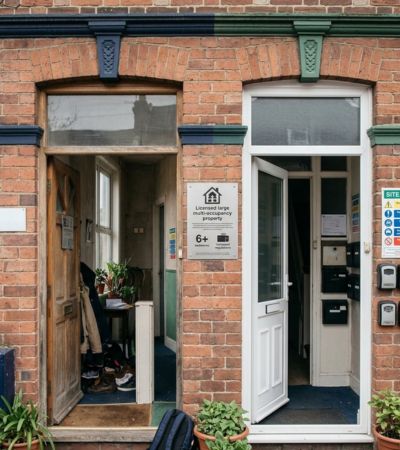
or more, the property typically becomes what the market calls a large HMO
- a distinct category not automatically covered by every standard HMO
lender, often needing a more specialist approach. It is not a dramatic cliff
edge, but it is a genuine threshold, and knowing where it sits saves approaching
the wrong lender for the wrong property. Money Pilot covers both sides of the
line - 200+ lenders, zero broker fees, FCA regulated (FRN:
968705).
Somewhere between a five-bedroom shared house and a converted
building with ten separate lettable rooms, the mortgage conversation quietly
changes shape. It's not a dramatic cliff edge, but it is a genuine threshold,
and knowing roughly where it sits saves a lot of wasted time approaching the
wrong type of lender for the wrong type of property.
Bank of England held base rate at 4.25% in June 2026 - waiting for inflation to cool.
73% of UK SMEs expect to grow in the next 12 months - confidence remains strong.
So, what's the typical maximum?
Most standard HMO mortgage products are built around properties
with up to six bedrooms. Once a property moves to seven or more bedrooms, it
typically falls into what the market calls a large HMO, a distinct category
that isn't automatically covered by every standard HMO lender, and often
requires a more specialist approach altogether.
Why does six bedrooms act as the natural dividing
line?
Because standard HMO mortgage products are generally priced and
underwritten around a fairly consistent risk profile, a manageable number of
tenancies, a reasonably predictable management burden, and room-by-room income
that stays within a scale most HMO lenders are comfortable assessing using
their standard criteria. Once a property grows beyond six bedrooms, the
management complexity, the number of individual tenancies to track, the
compliance requirements, and often the local licensing rules, all step up a
level, and lenders tend to treat it accordingly.
What actually changes once a property becomes a "large
HMO"?
A few things shift meaningfully:
- Fewer lenders are willing to consider
it. Standard HMO products often cap out around six bedrooms,
narrowing the pool of lenders genuinely comfortable going beyond
that.
- Underwriting becomes more
detailed. Larger HMOs typically receive closer scrutiny of the
room-by-room income breakdown, management arrangements, and compliance
standards, given the larger sums and greater complexity involved.
- Deposit requirements can
increase. Some lenders ask for a higher deposit on large HMOs,
reflecting the additional risk and complexity of a bigger shared
property.
- Experience matters more. Lenders
are often more cautious about supporting first-time landlords on large HMOs
specifically, favouring applicants with an existing HMO track record.
- Licensing requirements are almost certain to
apply. A seven-plus bedroom HMO will very likely trigger
mandatory licensing requirements, on top of whatever additional or selective
licensing the local council operates.
Does this mean seven-plus bedroom HMOs can't be
financed?
Not at all, it simply means they typically need a different type
of specialist lender, one genuinely set up to assess larger, more complex
shared properties, rather than a standard HMO product built around the
six-bedroom and under market. Several specialist lenders actively focus on
large HMOs and multi-unit freehold blocks, understanding the specific
compliance, management, and income assessment considerations that come with
scale.
Is there a hard legal definition tied to six or seven
bedrooms?
The bedroom threshold itself is primarily a lending market
convention rather than a fixed legal category, mortgage products are simply
built around it. Licensing rules, by contrast, are legally defined, mandatory
HMO licensing applies based on occupant numbers and households, not bedroom
count specifically, though in practice a seven-plus bedroom HMO will almost
always meet the occupancy threshold that triggers mandatory licensing.
What should landlords check before assuming a property fits
the "standard" category?
A few things worth confirming early:
The
exact number of bedrooms and occupants the property will support
- Whether that number sits within or beyond typical standard HMO
lending limits
- Whether mandatory, additional, or selective licensing applies
given the occupant numbers
- Whether the specific lender being approached actually supports
the size of HMO in question
Does property type affect where the threshold sits?
Occasionally, some lenders draw the line slightly differently
depending on property type, a large converted house might be treated
differently to a purpose-built HMO or a multi-unit freehold block, where the
building has been split into several genuinely self-contained units rather than
shared rooms. It's worth checking a lender's specific criteria rather than
assuming every lender applies exactly the same bedroom threshold.
The mistake landlords often make
Some landlords approach a standard HMO lender with a seven or
eight bedroom property, assuming it will simply be treated the same as a
six-bedroom application with slightly more rooms. In reality, that application
may fall outside the lender's standard criteria entirely, resulting in an
unnecessary decline that a genuine large HMO specialist would never have given
in the first place.
The bottom line
Standard HMO mortgage products are generally built around
properties with up to six bedrooms, while seven or more bedrooms typically
shifts a property into large HMO territory, requiring a more specialist lender,
closer underwriting scrutiny, and near-certain licensing obligations. Money
Pilot can guide you through the process and make sure you get the most
appropriate lender for your property.
FAQ
Maximum rooms standard hmo mortgage - your
questions answered
Because standard HMO
products are priced around a consistent risk profile - a manageable number of
tenancies, predictable management burden, and room income at a scale standard
criteria handle. Beyond six, complexity, compliance, and often licensing all
step up, and lenders treat it accordingly.
The lender list narrows
to specialists, underwriting goes more bespoke (experience, management
arrangements, and local demand evidence matter more), valuation more often
moves to an investment basis, and pricing reflects the specialist assessment.
Our large-HMO guide maps that market.
Lender product design is
typically bedroom-led, but licensing runs on occupants and households - a
six-bed let to seven sharers raises both questions. The two systems overlap
without being the same; check each against your actual letting
plan.
Often - larger HMOs can
fall into sui generis planning territory rather than standard classes, and
lenders expect the planning position correct alongside licensing. Size moves
more than the mortgage product.
Plan the finance before
the works: extending past the threshold mid-mortgage can put you outside your
lender's criteria. The clean route is funding the works with the end-product
lender (or a bridge-to-HMO structure) already
mapped.
By matching your
property's size - current and intended - to the lenders whose products
genuinely cover it, standard or large, at zero broker fees across 200+ lenders.
Call 020 4634 8617. FCA regulated (FRN:
968705).
Disclosure:
Money Pilot Ltd (FRN: 968705) is an Appointed Representative of Yellow Stone
Finance Group Ltd which is authorised and regulated by the Financial Conduct
Authority (FRN: 814533). Yellow Stone Finance Group Ltd is a credit broker not
a lender. Money Pilot Ltd is Registered in England and Wales No: 13621432. You
should always make sure you are able to afford any repayments as late or missed
payments can affect your credit rating and access to future finance.
YOUR PROPERTY MAY BE REPOSSESSED IF YOU DO NOT KEEP UP REPAYMENTS ON A MORTGAGE OR ANY OTHER DEBT SECURED ON IT.
What does Money Pilot do?
Our smart-search engine analyses your requirements — amount, term, business type, and credit profile — then instantly matches them against our panel of 200+ lenders.
Yes — comparing finance options and getting matched with lenders through Money Pilot is completely free, with no obligation to proceed.
Business finance, property finance, bridging loans, commercial mortgages and more — our panel of 200+ lenders covers most funding needs.
Often, yes. Many of our lenders specialise in cases with adverse credit history — our matching engine will surface the right options for your circumstances.
Indicative matches are instant. Full lender decisions typically follow within 24-48 hours, depending on the complexity of your enquiry.
You can complete the whole journey online, but our team is always on hand if you would rather talk it through with a specialist.
Yes, we work with introducing brokers under standard commission terms — get in touch with our team for details.
Three simple steps to get you the funding you need, faster.
1
Submit Enquiry
Complete a fast but in-depth overview of your finance requirements to allow our powerful matching engine to source the right lenders for you.
2
Connect
Engage directly with lenders in real-time, with our friendly advisors always on hand to guide you through every step of the funding journey.
3
Apply
Track your enquiry in real-time and seamlessly move to application — all in one place — getting you to your funds faster and with less hassle.
Get in touch with our team
Get a Quick Quote
Get in touch with our team
Contact Us
Telephone: 02046348617
Email: info@money-pilot.co.uk
Unit 1, Verney House 1B Hollywood Road, London SW10 9HS
Opening Times: 9am - 6pm, Mon - Fri
Company Registration No. 13621432
We use cookies to improve your experience, provide live support, and analyse site traffic. By clicking "Accept All", you consent to our use of cookies.
Cookie Preferences
Select which cookies you want to accept. Essential cookies cannot be disabled.
Required for the website to function securely and save your preferences.
Enables our live chat support (HubSpot) and remembers your session state.
Allows us to measure traffic and see how visitors use the site via Google Analytics.
Used to deliver and track personalized advertisements via Google Ads and Meta.