HomeArticlesHow Does Staged Drawdown Work in UK Development Finance?
How Does Staged Drawdown Work in UK Development Finance?
September 26, 2026 10 Min Read
Development Finance
✅ How does staged drawdown
work in UK development finance?
Staged drawdown
releases a development loan in instalments - tranches - as
construction progresses, rather than as a lump sum on day one. Each tranche is
typically linked to a specific build stage being reached and independently
verified before the next portion is released, so the lender’s
exposure at any point roughly matches the value of what has actually been
built. It is one of the defining features of how development finance operates.
Money Pilot structures drawdown schedules across 200+ lenders at zero broker
fees - FCA regulated (FRN: 968705).
Hand a developer the full loan amount on day one, and you've
handed them a large sum of money against a building that doesn't exist yet,
with months of construction still ahead and plenty of opportunity for costs,
timelines, and circumstances to shift. That's not how development finance
works, and for good reason. Instead, the money arrives in stages, tied closely
to what's actually been built. That's staged drawdown, and it's one of the
defining features of how development finance operates.
Bank of England held base rate at 4.25% in June 2026 — waiting for inflation to cool.
73% of UK SMEs expect to grow in the next 12 months — confidence remains strong.
What is staged drawdown?
Staged drawdown is the process of releasing a development
finance loan in instalments, or tranches, as construction progresses, rather
than as a single lump sum at the start. Each tranche is typically linked to a
specific stage of the build being reached and independently verified, before
the next portion of funding is released.
Why don't lenders just release the whole loan
upfront?
Because the risk profile of a development project changes
constantly throughout the build. Funding released in stages means the lender's
exposure at any given point roughly matches the value of what's actually been
built so far, rather than the full loan sitting against a project that's still
largely on paper. It also gives the lender a natural checkpoint at each stage
to confirm the project remains on track before committing further funds.
How does the process typically work?
A fairly consistent pattern across most UK development finance
lenders:
1. Initial drawdown. An initial
tranche is released to cover the land or property purchase, along with early
costs such as site preparation.
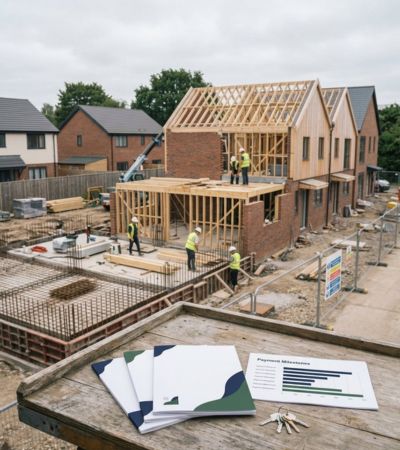
2. Construction milestones. As the
build reaches agreed stages, foundations complete, structure up to roof level,
first fix, second fix, and so on, further tranches are requested.
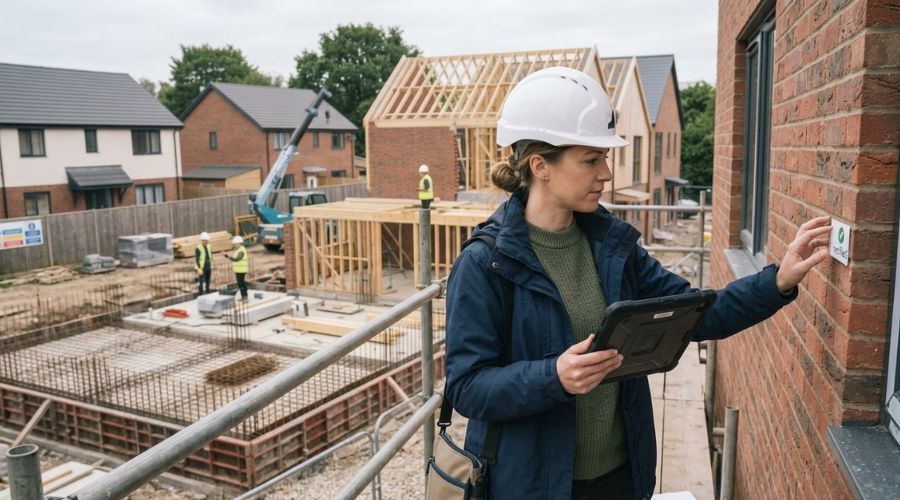
3. Independent verification. Before
each tranche is released, a monitoring surveyor typically inspects the site to
confirm the stage has genuinely been reached and the build is progressing as
planned.
4. Funds released. Once verified,
the lender releases the next tranche, which the developer uses to pay
contractors, suppliers, and ongoing costs for that phase.
5. Repeat until completion. This
cycle continues until the development reaches practical completion.
What is a monitoring surveyor, and why do they matter
here?
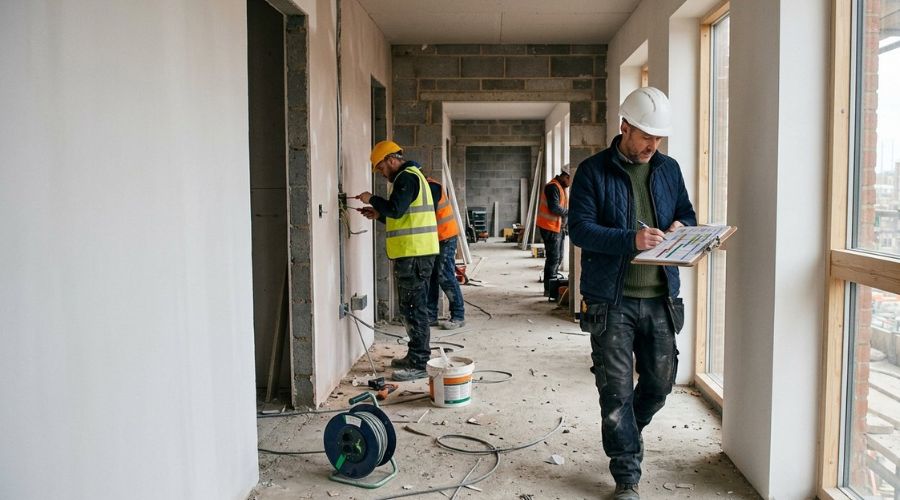
A monitoring surveyor is an independent professional appointed
to inspect progress on the lender's behalf before each tranche is released.
Their role is to confirm the work claimed has actually been completed, to a
reasonable standard, and that the project remains broadly on budget and on
schedule. Their sign-off is usually the trigger that allows the next drawdown
to happen, which makes them a fairly central figure in how smoothly the whole
process runs.
What happens if a stage isn't fully complete when funding is
requested?
Typically, the monitoring surveyor will flag this, and the
lender may delay releasing the next tranche until the relevant work is
finished, or release a partial amount reflecting what's actually been
completed. This is one of the most common sources of frustration for developers
unfamiliar with the process, requesting funds slightly ahead of verified
progress can create delays that ripple through the rest of the build.
How does staged drawdown affect cash flow during a
project?
Developers need to plan cash flow carefully around this
structure, since funds arrive only once a stage is verified, not the moment
costs are incurred. This means covering some costs, contractor payments,
materials ordered ahead of a stage, in the short gap between spending the money
and the next tranche landing. Experienced developers build this timing into
their overall cash flow planning from the outset, rather than assuming funds will
always arrive exactly when needed.
Does interest apply to the whole loan from day one, or only
what's drawn down?
Generally, interest is charged only on the amount actually drawn
down at any given point, not on the full facility from the start. This means
costs increase gradually as more of the loan is released, rather than the
developer paying interest on funds still sitting undrawn. It's one of the more
borrower-friendly aspects of how development finance is typically
structured.
What can delay the drawdown process?
A few recurring causes:
- Construction falling behind the agreed programme, delaying
when a stage is genuinely reached
- Cost overruns that raise questions about whether the remaining
budget is sufficient
Delays
in arranging the monitoring surveyor's inspection
Incomplete
or unclear documentation supporting the drawdown request
How can developers keep drawdowns moving smoothly?
A few practical habits help considerably:
- Requesting tranches only once a stage is genuinely, verifiably
complete
- Keeping clear records and documentation ready to support each
drawdown request
- Maintaining open communication with the lender and monitoring
surveyor throughout
- Building realistic timelines from the outset, rather than an
optimistic best-case schedule
The mistake developers often make
Some developers plan cash flow as though funds will arrive the
moment costs are incurred, rather than accounting for the verification step
that sits between a stage being reached and the tranche actually landing.
Building a short buffer into cash flow planning around each drawdown avoids
unnecessary pressure on contractor payments and project timelines.
The bottom line
Staged drawdown releases development finance in tranches tied to
verified construction progress, rather than as a single upfront sum, protecting
the lender's exposure while giving the project natural checkpoints along the
way. Understanding how monitoring surveyors, verification, and
interest-on-drawn-funds all fit together helps developers plan cash flow
realistically, rather than being caught out by a process that's designed to
move at the pace of the build, not the pace of the paperwork.
FAQ
Staged drawdown development finance - your
questions answered
Because handing over the
full sum against a building that doesn't exist yet mismatches money and risk -
costs, timelines, and circumstances shift across months of construction. Stages
keep exposure matched to progress, with a checkpoint before each further
commitment.
An independent
monitoring surveyor, acting for the lender - inspecting the works, confirming
progress and spend, and signing off before each tranche releases. Our
monitoring surveyor guide covers their role across the whole
project.
Typically days rather
than weeks once inspection and sign-off are done - but the practical discipline
is requesting drawdowns ahead of need and keeping evidence ready, so contractor
payments never wait on paperwork.
Your build programme and
contractor payment terms - the schedule is agreed upfront and should mirror
when cash is genuinely needed on site. A schedule designed around the real
programme prevents the squeeze between invoices due and tranches
pending.
The checkpoints exist
for exactly that - variances get discussed at stage level rather than
discovered at the end. A realistic contingency in the appraisal (see our
contingency guide) is what keeps a wobble from becoming a funding
crisis.
By agreeing a schedule
shaped to your real build programme at the outset, with a lender whose drawdown
process is proven, then supporting each release through to the final tranche -
200+ lenders, zero broker fees. Call 020 4634 8617. FCA regulated (FRN:
968705).
Disclosure:
Money Pilot Ltd (FRN: 968705) is an Appointed Representative of Yellow Stone
Finance Group Ltd which is authorised and regulated by the Financial Conduct
Authority (FRN: 814533). Yellow Stone Finance Group Ltd is a credit broker not
a lender. Money Pilot Ltd is Registered in England and Wales No: 13621432. You
should always make sure you are able to afford any repayments as late or missed
payments can affect your credit rating and access to future finance.
YOUR PROPERTY MAY BE REPOSSESSED IF YOU DO NOT KEEP UP REPAYMENTS ON A MORTGAGE OR ANY OTHER DEBT SECURED ON IT.
What does Money Pilot do?
Our smart-search engine analyses your requirements — amount, term, business type, and credit profile — then instantly matches them against our panel of 200+ lenders.
Yes — comparing finance options and getting matched with lenders through Money Pilot is completely free, with no obligation to proceed.
Business finance, property finance, bridging loans, commercial mortgages and more — our panel of 200+ lenders covers most funding needs.
Often, yes. Many of our lenders specialise in cases with adverse credit history — our matching engine will surface the right options for your circumstances.
Indicative matches are instant. Full lender decisions typically follow within 24-48 hours, depending on the complexity of your enquiry.
You can complete the whole journey online, but our team is always on hand if you would rather talk it through with a specialist.
Yes, we work with introducing brokers under standard commission terms — get in touch with our team for details.
Three simple steps to get you the funding you need, faster.
1
Submit Enquiry
Complete a fast but in-depth overview of your finance requirements to allow our powerful matching engine to source the right lenders for you.
2
Connect
Engage directly with lenders in real-time, with our friendly advisors always on hand to guide you through every step of the funding journey.
3
Apply
Track your enquiry in real-time and seamlessly move to application — all in one place — getting you to your funds faster and with less hassle.
Get in touch with our team
Get a Quick Quote
Get in touch with our team
Contact Us
Telephone: 02046348617
Email: info@money-pilot.co.uk
Unit 1, Verney House 1B Hollywood Road, London SW10 9HS
Opening Times: 9am - 6pm, Mon - Fri
Company Registration No. 13621432
We use cookies to improve your experience, provide live support, and analyse site traffic. By clicking "Accept All", you consent to our use of cookies.
Cookie Preferences
Select which cookies you want to accept. Essential cookies cannot be disabled.
Required for the website to function securely and save your preferences.
Enables our live chat support (HubSpot) and remembers your session state.
Allows us to measure traffic and see how visitors use the site via Google Analytics.
Used to deliver and track personalized advertisements via Google Ads and Meta.