HomeArticlesWhat Is Development Finance? And How Does It Work in the UK?
What Is Development Finance? And How Does It Work in the UK?
September 23, 2026 9 Min Read
Development Finance
✅ What is development
finance and how does it work?
Development
finance is short to medium-term funding for the construction, conversion, or
major refurbishment of property. Rather than lending the full amount upfront
against a finished asset like a mortgage, it is released in stages - tranches
- as the build progresses, and repaid once the project completes and is sold,
refinanced, or otherwise exited. It exists because at the start there is no
finished asset to lend against: the building is being created by the loan
itself. Money Pilot arranges it across 200+ lenders at zero broker fees -
FCA regulated (FRN: 968705).
There's a particular moment in every development project where a
bank loan simply stops making sense. You're not buying a finished building,
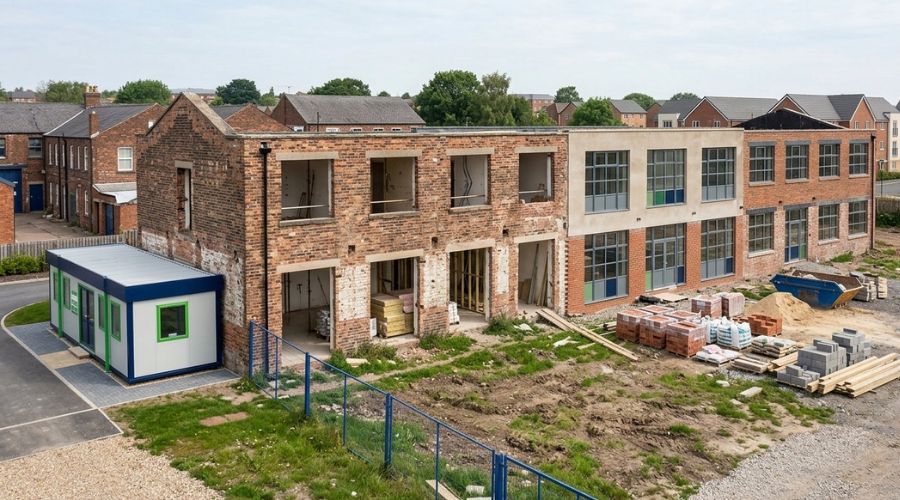
you're buying a plot, or a shell, or a half-converted warehouse, and you need
funding that arrives in stages as the building itself comes into existence.
That's precisely the gap development finance is built to fill.
Bank of England held base rate at 4.25% in June 2026 — waiting for inflation to cool.
73% of UK SMEs expect to grow in the next 12 months — confidence remains strong.
What is development finance?
Development finance is short to medium-term funding used to
finance the construction, conversion, or major refurbishment of property.
Rather than lending the full amount upfront against a finished asset, as a
standard mortgage would, development finance is released in stages, tranches,
as the build progresses, and repaid once the project is complete and sold,
refinanced, or otherwise exited.
It's built specifically around a simple reality: at the start of
a development, there often isn't a finished, valuable asset to lend against
yet. The building is the thing being created by the loan itself.
How does development finance actually work?
The structure typically follows a consistent pattern:
1. Initial funding. A portion of
the loan is released to cover the land or property purchase, plus initial
costs.
2. Staged drawdowns. As
construction progresses, further funds are released in tranches, often linked
to specific milestones being reached and verified.
3. Monitoring surveyor involvement.
Most lenders appoint an independent monitoring surveyor who inspects progress
before each tranche is released, confirming the build is on track and funds are
being used appropriately.
4. Interest handling. Interest is
typically rolled up or retained during the build, meaning you're not making
monthly repayments while construction is underway, similar in principle to how
bridging loans are often structured.
5. Exit and repayment. Once the
development is complete, the loan is repaid, commonly through selling the
finished units, refinancing onto long-term borrowing (sometimes via development
exit finance), or holding the property as an investment.
How much will a lender actually fund?
Development finance is typically assessed against two figures
rather than one:
- Loan to Cost (LTC), the
proportion of the total build cost, land plus construction, the lender is
willing to fund, commonly around 65-75%
- Loan to Gross Development Value
(LTGDV), the proportion of the finished, completed value the
lender is willing to lend against, often somewhere around 55-65%
Lenders typically apply whichever figure is more conservative
for the specific deal, which is why development finance calculations tend to
look more involved than a straightforward mortgage LTV.
What does a developer typically need to contribute?
Beyond the loan itself, developers are usually expected to
contribute:
- A deposit or equity stake,
commonly somewhere in the region of 25-35% of the total cost, depending on the
lender and the strength of the scheme
- Evidence of experience,
particularly for larger or more complex schemes
- A realistic build cost and
timeline, ideally supported by a professional quantity surveyor
or similar
- Planning permission already in
place, or a clear, credible path to obtaining it
What do lenders look at when assessing a development finance
application?
Quite a broad range of factors, including:
The
developer's experience and track record with similar projects
- The build costs and whether they're realistic, ideally
independently assessed
The
projected Gross Development Value once complete
Planning
status and any conditions attached
- The proposed exit strategy, selling, refinancing, or retaining
as an investment
The
build programe and whether the timeline is credible
Experience matters more here than in many other forms of
property finance, since the lender is effectively backing the developer's
ability to actually deliver the project, not just the value of the finished
asset.
Who uses development finance?
Commonly:
- Experienced developers building new residential or commercial
schemes
- Businesses converting existing buildings into new use, offices
into flats, for example
Smaller
developers taking on individual plots or small schemes
- Investors undertaking heavier refurbishment projects that go
beyond what a standard bridging loan would typically cover
What happens once construction finishes?
This is often where a separate but related product comes in.
Once practical completion is reached, many developers move onto development
exit finance, a shorter-term loan specifically designed to repay the
development loan and provide breathing space to sell or refinance the finished
units, rather than continuing to hold expensive development finance while
marketing is still underway.
What can make an application stronger?
A few things consistently help:
- A realistic build cost, ideally verified independently rather
than self-estimated
- Relevant experience with similar schemes, or a strong team
around a first-time developer
Planning
permission secured, or very close to being secured
A
credible, well-evidenced exit strategy
The mistake developers often make
Some developers focus heavily on securing the initial funding
and underestimate how closely tranches are monitored throughout the build.
Falling behind schedule, or deviating from the agreed budget, can delay
drawdowns considerably. Building a realistic contingency into both the budget
and the timeline from the outset avoids a lot of that friction later.
The bottom line
Development finance funds property construction, conversion, and
major refurbishment in the UK, released in stages as the build progresses
rather than as a single upfront sum. Lenders assess it against both cost and
projected finished value, and developer experience carries real weight in the
decision.
Get the costs realistic, the planning in place, and the exit
strategy credible, and development finance becomes the tool that turns a plot
of land, or a half-finished shell, into a completed, valuable asset.
FAQ
What is development finance and how does
it work - your questions answered
Because standard
products lend against a finished, valuable asset - and at the start of a
development there isn't one yet. A plot, a shell, or a half-converted warehouse
needs funding structured around the build itself, which is exactly the gap
development finance fills.
A consistent pattern:
initial funding released against the land or property purchase plus early
costs, then staged drawdowns in tranches as construction hits verified
milestones, and finally repayment at exit - sale or refinance of the completed
scheme.
Ground-up construction,
conversions (offices to flats, barns to homes), and major refurbishments -
anything where significant value is being created through building works rather
than purchased ready-made.
Against two measures at
once: Loan to Cost (land plus construction) and Loan to GDV - the projected
finished value - with lenders applying whichever produces the more conservative
figure. Our LTGDV guide covers the mechanics.
The repayment route -
selling the finished units or refinancing onto longer-term lending. Lenders
underwrite the exit as hard as the build, because the loan is repaid by the
project succeeding, not by monthly instalments along the
way.
Whole-of-market across
200+ lenders including the specialist development funders, at zero broker fees
- from first appraisal through staged drawdowns to exit. Call 020 4634 8617.
FCA regulated (FRN: 968705).
Disclosure:
Money Pilot Ltd (FRN: 968705) is an Appointed Representative of Yellow Stone
Finance Group Ltd which is authorised and regulated by the Financial Conduct
Authority (FRN: 814533). Yellow Stone Finance Group Ltd is a credit broker not
a lender. Money Pilot Ltd is Registered in England and Wales No: 13621432. You
should always make sure you are able to afford any repayments as late or missed
payments can affect your credit rating and access to future finance.
YOUR PROPERTY MAY BE REPOSSESSED IF YOU DO NOT KEEP UP REPAYMENTS ON A MORTGAGE OR ANY OTHER DEBT SECURED ON IT.
What does Money Pilot do?
Our smart-search engine analyses your requirements — amount, term, business type, and credit profile — then instantly matches them against our panel of 200+ lenders.
Yes — comparing finance options and getting matched with lenders through Money Pilot is completely free, with no obligation to proceed.
Business finance, property finance, bridging loans, commercial mortgages and more — our panel of 200+ lenders covers most funding needs.
Often, yes. Many of our lenders specialise in cases with adverse credit history — our matching engine will surface the right options for your circumstances.
Indicative matches are instant. Full lender decisions typically follow within 24-48 hours, depending on the complexity of your enquiry.
You can complete the whole journey online, but our team is always on hand if you would rather talk it through with a specialist.
Yes, we work with introducing brokers under standard commission terms — get in touch with our team for details.
Three simple steps to get you the funding you need, faster.
1
Submit Enquiry
Complete a fast but in-depth overview of your finance requirements to allow our powerful matching engine to source the right lenders for you.
2
Connect
Engage directly with lenders in real-time, with our friendly advisors always on hand to guide you through every step of the funding journey.
3
Apply
Track your enquiry in real-time and seamlessly move to application — all in one place — getting you to your funds faster and with less hassle.
Get in touch with our team
Get a Quick Quote
Get in touch with our team
Contact Us
Telephone: 02046348617
Email: info@money-pilot.co.uk
Unit 1, Verney House 1B Hollywood Road, London SW10 9HS
Opening Times: 9am - 6pm, Mon - Fri
Company Registration No. 13621432
We use cookies to improve your experience, provide live support, and analyse site traffic. By clicking "Accept All", you consent to our use of cookies.
Cookie Preferences
Select which cookies you want to accept. Essential cookies cannot be disabled.
Required for the website to function securely and save your preferences.
Enables our live chat support (HubSpot) and remembers your session state.
Allows us to measure traffic and see how visitors use the site via Google Analytics.
Used to deliver and track personalized advertisements via Google Ads and Meta.