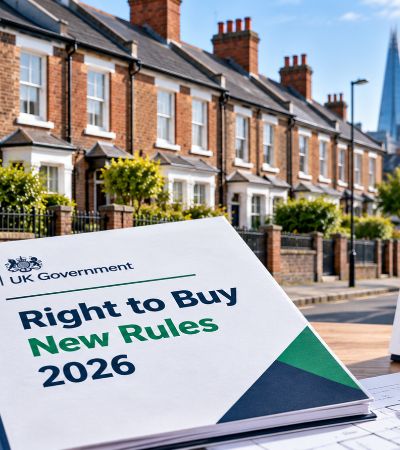
✅ What are the Right to Buy changes?
The right to buy changes 2026 amount to the biggest tightening of the scheme since it began. Confirmed by government and being legislated through the Social Housing Bill: the minimum qualifying period rises from three years to ten years as a social tenant; the percentage discount starts at just 5% after ten years and climbs 1% a year to a 15% maximum; cash discounts are capped between £16,000 and £38,000 depending on location; newly built social homes are exempt for 35 years; and rural homes are exempt entirely. Tenants who still qualify can absolutely buy - and lenders remain comfortable with ex-council stock - but the window is narrower and the discount smaller. Money Pilot arranges Right to Buy mortgages across 200+ lenders with zero broker fees, FCA regulated (FRN: 968705).
The right to buy changes 2026 mark the end of Right to Buy as most people remember it - the generous, fast-qualifying discount scheme of the past four decades is being replaced by something far tighter, confirmed by government this spring and now moving through Parliament in the Social Housing Bill. If you’re a social tenant weighing a purchase, a family member helping fund one, or a buyer eyeing ex-council stock on the open market, the new rulebook changes your maths. This guide covers the discount cuts, the new purchase rules, and what mortgage lenders make of it all.

Bank of England held base rate at 4.25% in June 2026 — waiting for inflation to cool.
73% of UK SMEs expect to grow in the next 12 months — confidence remains strong.
Right to buy discount cuts - the new numbers
The right to buy discount cuts are the headline change, and they bite twice - once on the percentage, once on the cap:
- Ten-year minimum - you must have been a social housing tenant for ten years before you can apply, up from three
- 5% starting discount - the percentage discount begins at 5% at the ten-year mark, rising 1% per year of tenancy
- 15% maximum - the discount tops out at 15%, a fraction of the historic maximums
- Cash caps of £16,000–£38,000 - whatever the percentage produces, the cash discount is capped by location, with the lower caps already in force since the 2024 Budget cut them from six-figure levels
- Repeat use limited - the Bill restricts using the discount more than once, and adds protections against third parties pressuring vulnerable tenants into selling their discount
Worked example: a tenant of 12 years in a £220,000 council house gets a 7% discount - £15,400, inside the cap. Under the old rules the same tenant could have received several times that. The discount still helps - it’s effectively a deposit the tenant didn’t have to save - but it no longer transforms the purchase.
Ex council purchase rules new - what else the Bill changes
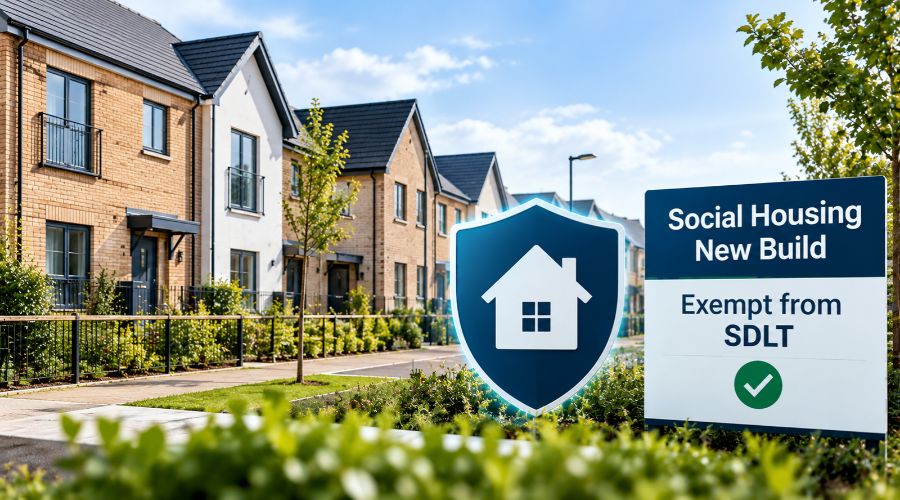
Beyond discounts, the ex council purchase rules new framework reshapes which homes can be bought at all. Newly built social homes are exempt from Right to Buy for 35 years after completion - the government’s answer to councils refusing to build stock they’d be forced to sell at a loss. Rural properties are exempt entirely. And councils now keep 100% of sale receipts, with the freedom from 2026–27 to combine them with grant funding to build replacements - a structural change designed to stop every sale shrinking the overall stock.
For open-market buyers, there’s a second-order effect worth understanding: fewer new Right to Buy sales means the existing pool of ex-council homes on the resale market becomes relatively more significant. Ex-local-authority stock is often the best value-per-square-metre in its postcode, and it remains fully mortgageable - with caveats covered below.
RTB mortgage eligibility now - what lenders actually ask
The rtb mortgage eligibility now question matters more than the discount itself - a discount you can't finance is academic. Here's what lenders look at on Right to Buy and ex-council applications.
Lenders check:
- Open market value, not discounted price - most lenders lend against the full valuation, so the discount can serve as your deposit; many fund 100% of the discounted price
- Construction type - standard-build ex-council houses are straightforward; non-standard construction and some high-rise or deck-access flats need specialist lenders
- Discount repayment rules - sell within five years and some or all of the discount is repayable; lenders factor this into early-exit scenarios
- Affordability as normal - income, credit history and outgoings are assessed exactly as on any purchase; the discount doesn't relax underwriting
Who wins, who loses - and what to do before the Bill passes
The losers are obvious: shorter-tenure tenants who’d have qualified under the three-year rule, and long-tenure tenants whose discount shrinks from life-changing to helpful. The winners are councils - full receipts, protected new stock - and, arguably, future tenants, since the reforms are explicitly designed to stop the social housing stock draining away. For buyers of ex-council homes on the open market, little changes except supply dynamics.
If you’re a tenant who qualifies under current rules, timing matters: reforms confirmed in April are being legislated through a Bill introduced in May, and transitional arrangements will determine which rulebook your application falls under. An application validly made under existing rules is generally assessed under them - so taking advice early beats waiting. And whatever the discount, the mortgage side rewards whole-of-market advice: ex-council stock is exactly the territory where one lender declines on construction type and another - often a specialist - is comfortable. With a permanent 95% guarantee scheme now running alongside, even tenants with minimal savings beyond the discount have routes worth comparing - especially in a growing lending market.