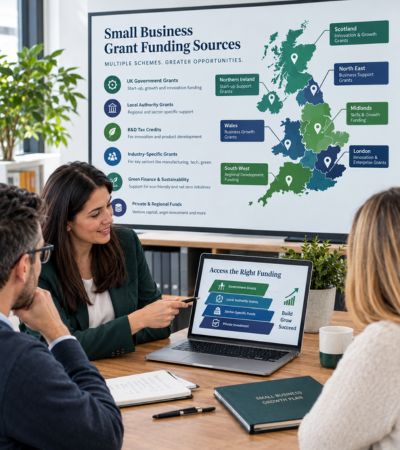
✅ What grants are available for UK small businesses in 2026?
The live map by layer: innovation - Innovate UK’s Smart grants and themed competitions for genuinely novel R&D projects; local and regional - council and combined-authority business funds (the post-UKSPF local-funding landscape), Growth Hub support, and devolved-nation schemes in Scotland, Wales and NI; green - energy-efficiency and decarbonisation grants covered in our energy guide; sector - farming, creative, tourism and digital-adoption schemes; plus grant-adjacent support like Start Up Loans and R&D tax relief. Most are competitive and match-funded at 30–60%. Money Pilot funds the match - 200+ lenders, zero broker fees, FCA regulated (FRN: 968705).
Hunting small business grants uk 2026 rewards a mindset shift: there is no single national pot, there is a map - innovation money at the top, local and regional funds in the middle, sector and green schemes along the edges - and almost everything on it is competitive, match-funded and deadline-driven. The businesses that win treat grants as a pipeline, not a lottery ticket: they know the map, they apply to fit, and they pair every grant with the finance that covers the match. Here is that map, and the winning method.
Bank of England held base rate at 4.25% in June 2026 - waiting for inflation to cool.
73% of UK SMEs expect to grow in the next 12 months - confidence remains strong.
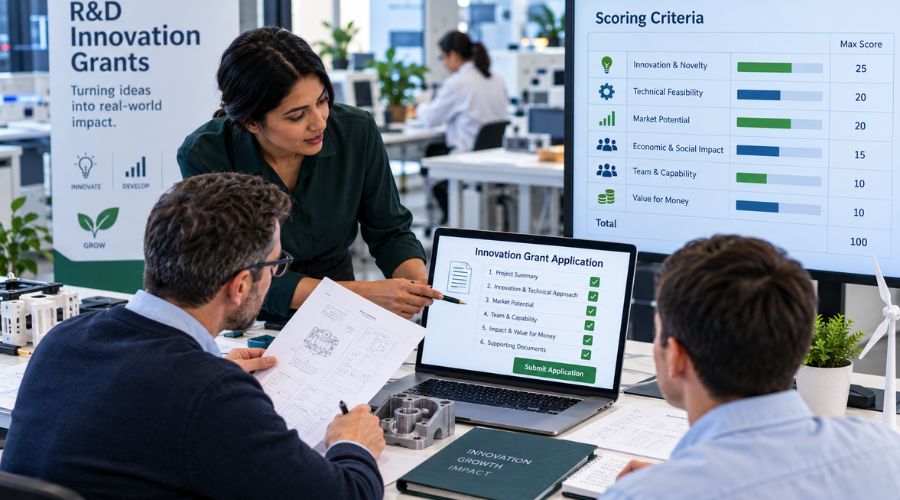
Innovate UK grants for SMEs - the top of the map
Innovate uk grants for smes remain the deepest single source of business grant money - and the most misunderstood. The flagship Smart-style open competitions fund genuinely disruptive R&D (not routine product development), typically covering a percentage of project costs with the business funding the rest; themed competitions run continuously across AI, net zero, health, manufacturing and more - the live list sits on the Innovation Funding Service, and fit beats force: a mediocre application to the right theme outscores a brilliant one to the wrong theme. Know the realities before committing the weeks an application takes: success rates are low (single digits on flagship rounds), assessors score against published criteria - answer the scorecard, not your passion - and funding arrives in arrears against claimed costs, which makes cash-flowing the project a finance question from day one. Related but different: the merged R&D tax relief scheme rewards qualifying work after the fact - our R&D claim guide covers it, and the two stack.
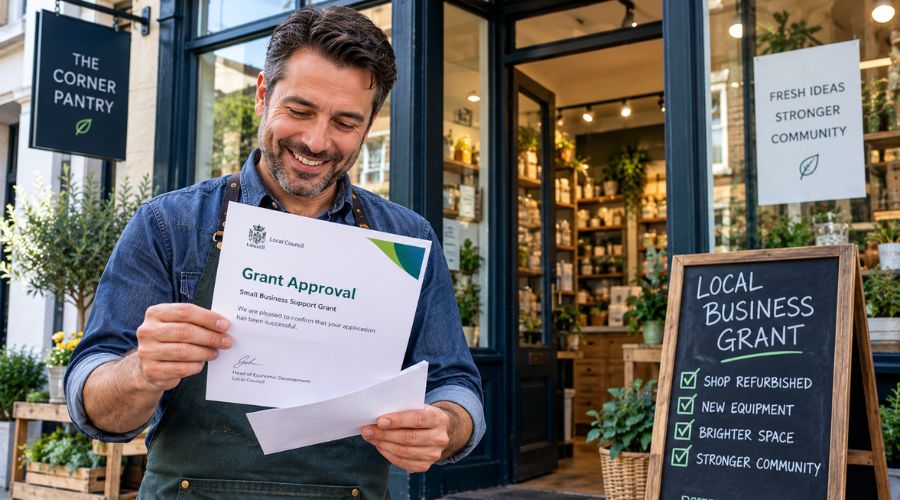
Local council business grants UK - the layer most SMEs never check
Local council business grants uk are where ordinary businesses - the café, the fabricator, the agency - actually win money, precisely because the pots are small, local and under-applied. The 2026 landscape: councils and combined authorities run business-support funds through the post-UKSPF local-funding arrangements (names vary by area - growth grants, shopfront schemes, digital adoption vouchers, capital equipment match-funds); Growth Hubs remain the free front door that knows what is live in your postcode this quarter; and the devolved nations run their own machinery - Scottish Enterprise, Business Wales and Invest NI all operate standing grant and support programmes. The method is unglamorous: register with your Growth Hub, check the council’s business pages quarterly, get on the mailing lists, and keep a one-page business summary ready - local rounds open and close in weeks, and the prepared applicant wins by default against the one still drafting.
Grant vs loan - which first UK businesses should chase
Grant vs loan which first uk is the sequencing question behind every funding plan - and the honest answer is: usually both, in the right order.
The decision logic:
- Grants are cheap but slow and conditional - free money, bought with competitive applications, match-funding requirements, arrears payment and spending rules
- Loans are fast and flexible - cost interest, but arrive in weeks, spend on anything, and scale with the business (secured vs unsecured covers the menu)
- The stack beats the choice - most grants fund 30–60% of a project: finance covers the match, the working capital while grant money arrives in arrears, and everything grants won’t touch
- Never delay revenue for a maybe - a project that pays back in months should rarely wait two quarters for a possible grant; chase grants for the projects that need subsidy, finance the ones that don’t
- Grant-adjacent support counts - Start Up Loans (government-backed personal lending into new businesses) and the Growth Guarantee Scheme behind bank facilities widen what “fundable” means
How winners actually apply - the tactics assessors reward
Across every layer of the map, winning applications share mechanics: they answer the published criteria in the assessor’s order (scoring guides are public - write to them); they quantify - jobs, revenue, carbon, dates - where losers adjective; they evidence additionality (“this happens bigger/faster/at-all because of the grant” is the question every scheme exists to answer); they show the match funding is already arranged, which is where a finance offer letter quietly doubles as application evidence; and they apply early in windows, because real humans score and real budgets run out. Treat rejection as market feedback: debriefs are usually available, and second applications convert far better than first ones.
Pairing grants with finance - the Money Pilot layer
Grants and lending are teammates, not rivals: the match funded, the arrears gap bridged, the equipment layer on asset finance, the energy measures stacked with the green schemes in our energy costs guide, and the day-to-day engine on the working-capital menu. Money Pilot arranges the finance side of every grant-funded plan - match funding, bridging-the-arrears facilities, asset finance and guarantee-backed lending - across 200+ lenders at zero broker fees. Call 020 4634 8617 with the project and the scheme deadline; arriving at an application with funding evidenced is the quiet edge most applicants never bring. FCA regulated (FRN: 968705).