Partner with investors for seamless business transitions — Money Pilot connects you to lenders funding buy-in management buyouts for shared ownership and growth.











Money Pilot supports businesses transitioning leadership through blended buy-in and buyout funding models.
We align capital, management expertise, and lender confidence to ensure smooth acquisitions.
Share your plans, the amount you need and a little about your business or property.
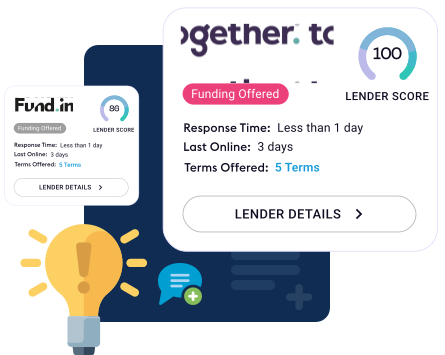
See matching finance products across our lender panel, together in your account.
Review rates, costs and terms. Ask questions and share documents as your enquiry progresses.
Decide which option to progress and move towards an application, with support when you need it.
The lender assesses your application. Funding follows if it is approved and its conditions are met.
Our team can help you understand your options and the next step.
Money Pilot streamlines leadership and ownership continuity.

Money Pilot ensures balanced, sustainable ownership transfers.
Money Pilot delivers stability through collaborative funding partnerships.
At Money Pilot, we support BIMBO transactions with lenders who appreciate succession realities. We balance debt and equity, align incentives, and coordinate diligence to close. With transparent structures and expert guidance, ownership transitions smoothly.
Get In Touch
Strategic funding options designed to support growth, acquisitions, and stability over the medium term:
Everything you need to know about comparing finance and using Money Pilot. Can't find an answer?
Talk to our teamA combination of buy-in and buyout management acquisition.
An MBO (management buyout) is where the existing management team acquires the business they already run. An MBI (management buy-in) is where an entirely external management team acquires a business they do not currently manage. A BIMBO (buy-in management buyout) is a hybrid — an external buyer partners with part of the existing management team to jointly acquire the business. The BIMBO combines the external buyer's capital and strategic perspective with the incumbents' operational knowledge, creating a lower-risk structure than a pure MBI while introducing fresh capital and ambition that a pure MBO may lack.
The incumbent management's equity stake in a BIMBO varies by transaction but typically ranges from 20 to 40% of the total equity. The exact percentage depends on the relative capital contributions of the external buyer and the management team, the negotiated management equity scheme (which may include options and performance ratchets), and the level of leverage in the transaction. Management equity in a leveraged BIMBO is typically structured as a combination of ordinary shares and loan notes, with a sweet equity component that provides additional returns if the business outperforms its acquisition business plan.
Yes — a first-time external buyer without a private equity track record can complete a BIMBO where the acquisition target is of appropriate size and the incumbent management team is strong and well-retained. Specialist acquisition lenders assess the external buyer's relevant sector experience and business track record rather than requiring a formal private equity background. The strength of the incumbent management team and the quality of the target business's earnings are typically the most important factors for first-time buyers in a BIMBO transaction. Money Pilot identifies the lenders most open to first-time buyers for your specific transaction.
A well-structured UK BIMBO transaction typically takes 3 to 6 months from initial heads of terms to legal completion. The process involves financial due diligence by the lender's appointed accountants, legal due diligence on the target business, negotiation of the acquisition finance facility, and preparation of the management equity scheme documentation. Transactions involving private equity or complex management equity structures take longer. Early appointment of specialist acquisition finance advisers and legal counsel significantly accelerates the process.
Specialist acquisition finance lenders for BIMBOs typically take a debenture (fixed and floating charge) over the whole target business — covering assets, goodwill, intellectual property, and cash flows. Where the acquisition is structured through a holding company (Newco), the lender takes security over the Newco's shares in the target business and over the target business itself. Personal guarantees from the management team are sometimes required for smaller transactions. The security structure is negotiated between the lender's and management team's legal advisers as part of the acquisition process.
Explore buy-in management buyouts (bimbo) with Money Pilot. Our team can help you understand your options and identify suitable providers for your circumstances. Our overall panel includes more than 200 lenders across business and property finance. The lenders available for your enquiry depend on the funding type and your circumstances.
Our team typically replies within 2 hours.
✅ What is a BIMBO and how does buy-in management buyout finance work in the UK?
A buy-in management buyout combines members of the existing management team with an external buyer to acquire a business. Funding may bring together loans, investor equity and other agreed arrangements.
Money Pilot can help you explore suitable finance options. Our overall panel includes more than 200 lenders across business and property finance. Not all lenders offer every type of finance. The lenders available for your enquiry depend on the funding type and your circumstances.
A buy-in management buyout combines the best features of an MBO and an MBI - the external buyer's capital and broader strategic vision with the incumbent management's deep knowledge of the business, its customers, and its operations. This combination reduces the execution risk that makes pure MBIs challenging to fund, while introducing the fresh strategic perspective and additional capital that pure MBOs sometimes lack.

Explore buy-in management buyouts (bimbo) options for your plans.

Available funding depends on your circumstances and provider criteria.
In a pure management buy-in, an entirely external team acquires a business it does not know. Key staff may leave, customer relationships may be disrupted, and operational knowledge may be lost in the transition. Lenders price this execution risk into higher rates and lower leverage. A BIMBO retains key incumbent managers who maintain business continuity during the transition while the external buyer leads the strategic direction. This continuity significantly reduces lender risk and results in better terms than a comparable pure MBI.
Money Pilot structures BIMBO finance alongside MBO and MBI finance from specialist UK acquisition lenders. no fee for standard services; any applicable fee will be explained and agreed before you proceed.
BIMBO lenders assess both the target business and the combined management team. The key advantage of the BIMBO structure is that the incumbent management's presence reduces the execution risk that lenders associate with pure MBIs.
Key BIMBO lender assessment criteria:

A BIMBO combines an external buyer's capital with the incumbent management's operational knowledge - reducing execution risk for lenders and delivering better terms than a pure MBI. Money Pilot structures all layers at no fee for standard services; any applicable fee will be explained and agreed before you proceed.
These four scenarios illustrate why the BIMBO structure is often superior to a pure MBI or MBO for all parties - the external buyer, the incumbent management, the vendor, and the lenders.
A founder who wants to sell the business entirely but whose management team cannot fund a full MBO is the most common BIMBO scenario. An external buyer acquires a controlling stake, the founder exits cleanly, and the management team retains a meaningful minority equity stake that aligns their interests with the new owner. The management team's continued presence ensures operational continuity during the transition and reduces the execution risk that would make a pure MBI harder to fund. The vendor receives a full cash exit; the management team receives equity participation in the business they know best.
In businesses with multiple founders or senior leaders, a BIMBO allows one founder to exit while the other remains to lead the business alongside an external buyer. The external buyer provides the capital to fund the exiting founder's buyout; the remaining founder retains their shareholding. This structure is common in professional services, technology, and family-owned businesses where one co-founder wishes to retire or pursue other interests while the other has years of productive contribution remaining.
For businesses above £5 million enterprise value, private equity firms frequently structure acquisitions as BIMBOs — providing the equity capital as the external buyer while requiring the incumbent management team to retain a meaningful equity stake. The management team's equity stake (typically 20 to 40%, structured through a management equity scheme with options and ratchet provisions) aligns their interests with the private equity investor's goal of growing the business and achieving a profitable exit within 3 to 7 years. Money Pilot structures the senior debt and mezzanine layers alongside the private equity equity component.
Business owners considering a trade sale to a competitor or industry consolidator sometimes prefer a BIMBO because it preserves management employment, maintains the business's independence, and allows the owner to choose the incoming buyer rather than accepting a competitor's terms. A BIMBO also typically moves faster than a formal trade sale process, reducing the uncertainty and distraction that an extended sale process creates for the business's management team and customers. For businesses with strong cash generation and a motivated management team, a BIMBO is often the preferred exit route.

Explore buy-in management buyouts (bimbo) options for your plans.

Available funding depends on your circumstances and provider criteria.
Funders underwrite two classic worries: the pure MBO team that knows the business but has never led one, and the pure MBI buyer with leadership pedigree but no inside knowledge. The BIMBO answers both at once - which is why the blended deal frequently funds where the pure versions strain.
| What matters | Forcing a pure MBO or MBI | Money Pilot |
|---|---|---|
| Inside knowledge | MBI's gap - the buyer learns on the job | Incumbent managers carry it from day one |
| Leadership / missing skill | MBO's gap - the team's untested layer | The incoming manager is hired-in proof |
| Continuity risk | Customers and staff face a stranger, or the same ceiling | Faces they know + fresh direction |
| Lender appetite | Underwrites the weakness | Underwrites the complement - often better leverage and pricing |
| Broker fee | - | Money Pilot does not charge a fee for its standard services. If a fee applies, we will explain it and obtain your agreement before you proceed. |
Underwriting then runs on the blended evidence: the incumbents' numbers prove the business, the incomer's track record proves the plan, and the combined pack - accounts, the growth plan the new skill unlocks, and both CVs doing real work - is what we place across the lender market. The debt stack itself (senior, vendor, mezzanine, team investment) assembles exactly as on our MBO and MBI finance page - the BIMBO changes who stands behind it, and usually strengthens it.
Our service fees
Money Pilot does not charge a fee for its standard services. If a fee applies, we will explain it and obtain your agreement before you proceed.
Telephone: 02046348617
Email: info@money-pilot.co.uk
Unit 1, Verney House
1B Hollywood Road, London
SW10 9HS
Opening Times: 9am - 6pm, Mon - Fri
Company Registration No.
13621432