✅ What are the stamp duty rules for investors in 2026?
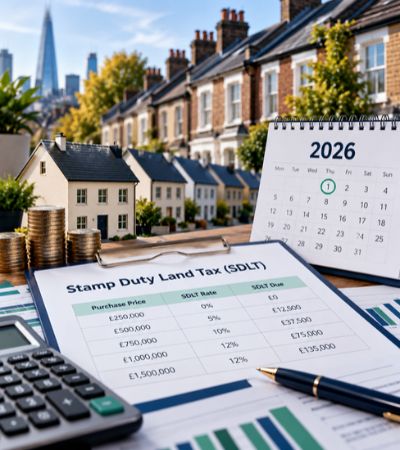
The current regime (England & NI): residential bands of 0% to £125,000, 2% to £250,000, 5% to £925,000, 10% to £1.5m and 12% above — with investors and second-home buyers paying a +5% surcharge on every band and non-UK residents a further +2%. Commercial and mixed-use property uses kinder bands: 0% to £150,000, 2% to £250,000, 5% above — with no investor surcharge. Reform speculation ahead of the Budget is real but unconfirmed. Money Pilot funds purchases with SDLT costed from day one — 200+ lenders, zero broker fees, FCA regulated (FRN: 968705).
Tracking sdlt changes 2026 investors face means holding two things at once: a settled current regime you can compute to the pound, and a reform conversation that resurfaces every Budget cycle — louder this year than most. This guide locks down today’s numbers (the part that prices your next deal) and grades the speculation (the part that shouldn’t drive it), with worked examples at the prices investors actually pay.

Bank of England held base rate at 4.25% in June 2026 — waiting for inflation to cool.
73% of UK SMEs expect to grow in the next 12 months — confidence remains strong.
Stamp duty investor surcharge now — today’s regime, worked
The stamp duty investor surcharge now stands at 5% on top of every residential band (raised from 3% in October 2024) for additional dwellings — which for a portfolio landlord means effectively every purchase. The arithmetic at real price points:
- £200,000 terrace — standard £1,500; investor £11,500 (surcharge adds £10,000)
- £300,000 semi — standard £5,000; investor £20,000
- £500,000 HMO-sized house — standard £15,000; investor £40,000 — a number that belongs in every HMO appraisal before the yield romance
- Limited companies pay the same surcharge — incorporation changes income-tax treatment, not SDLT (and £500k+ corporate dwellings can trip the 15% flat rate where reliefs don’t apply — specialist advice territory)
- Non-UK residents — a further +2% on top of everything above
- What’s gone — Multiple Dwellings Relief was abolished in 2024: block and portfolio buyers now model without it (six-plus dwellings in one deal can still elect commercial rates)
Commercial SDLT rates 2026 — the quieter, kinder schedule
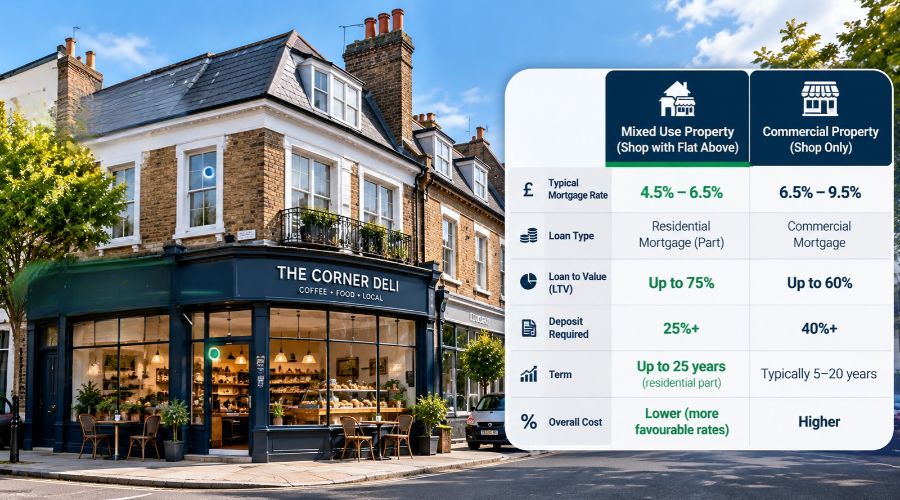
Commercial sdlt rates 2026 remain one of the tax system’s better-kept secrets: non-residential and mixed-use property pays 0% to £150,000, 2% from £150,001 to £250,000, and 5% on everything above — with no surcharge for investors. On a £500,000 purchase that is £14,500 against £40,000 residential-with-surcharge: a £25,500 difference that explains much of the investor drift toward semi-commercial property. The caveats that keep advisers employed: mixed-use classification is substance-over-labels (a token “office” in a house doesn’t convert it, and HMRC litigates aggressively here), leasehold commercial deals add an NPV-of-rent calculation, and the genuinely mixed building — the shop with the flat above — is where the rates, the lending and the use all have to be read together.
SDLT reform speculation budget — grading the rumours
The sdlt reform speculation budget cycle is louder in 2026 than usual — reports that government has examined replacing SDLT outright keep resurfacing. Grade it before trading on it.
The honest assessment:
- The recurring report — a national annual property tax replacing SDLT (floated for higher-value homes first) has been examined in-government per multiple 2025/26 reports: real work, no published consultation, no legislation
- Why reform tempts chancellors — SDLT is widely criticised for freezing transactions; replacing a one-off hit with an annual charge raises steady revenue and polls as ‘modernisation’
- Why it keeps not happening — transition is brutal: recent buyers who paid six figures of SDLT won’t pay twice quietly, and valuation machinery takes years
- Historic form matters — when SDLT does change, it has repeatedly taken effect overnight: mid-transaction buyers should complete under known rules, not pause into rumour
- The investor posture — underwrite deals on today’s regime, keep the Budget watchlist open, and let consultations — not columns — trigger strategy changes
First-time buyers and the edges of the regime
For completeness — and because investors sell to them — first-time buyer relief currently zero-rates the first £300,000 (on homes up to £500,000), a line that shapes demand in exactly the terraced stock landlords trade. Scotland (LBTT, with a 8% additional dwelling supplement) and Wales (LTT, 5% surcharge) run their own schedules — cross-border portfolio buyers budget per nation, not per headline. And the perennial practical point: SDLT is due within 14 days of completion, it is a cash cost lenders won’t mortgage, and deals that “work” only before stamp duty didn’t work.
Pricing SDLT into the funding — where we come in
Our rule on every purchase we fund: the full SDLT figure — surcharge, nation, classification checked — sits in the appraisal before the offer goes in, alongside deposit, works and finance costs. It changes product choice too: the £25k+ residential-vs-mixed-use swing can justify the semi-commercial route’s different lender pool, and bridging buyers must fund the 14-day bill inside the facility plan. Money Pilot structures the whole stack — 200+ lenders, zero broker fees — with the tax figures confirmed by your conveyancer, not guessed from a calculator. Call 020 4634 8617 before you bid. FCA regulated (FRN: 968705).