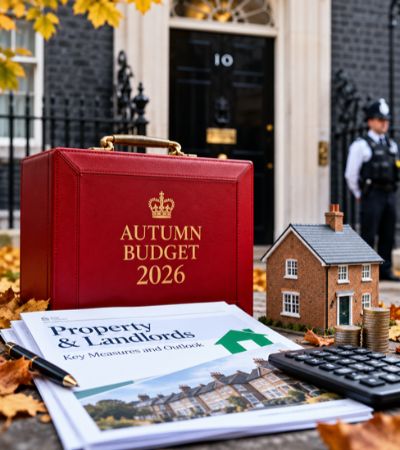
✅ What will the Autumn Budget 2026 mean for landlords?
Nobody knows yet - and that is the honest starting point. The autumn budget 2026 property landlords speculation centres on familiar territory: CGT rates nudging toward income tax levels, extended threshold freezes, tighter landlord reliefs, dividend-tax tweaks for company directors, and the perennial SDLT rumours. What is already law matters more for planning: BADR hit 18% in April, employer NIC runs at 15%, and MTD keeps expanding. The sensible posture: complete in-flight transactions efficiently, use allowances you were using anyway, and make no irreversible moves on rumours. Money Pilot - 200+ lenders, zero broker fees, FCA regulated (FRN: 968705).
The autumn budget 2026 property landlords conversation starts earlier every year, and the long run-up is itself a market force: transactions pause, speculation hardens into “everyone knows”, and expensive decisions get made to dodge taxes that never materialise. This watchlist separates the three things worth separating - what is already legislated, what is credibly speculated, and what you can actually do about either - with the Budget expected in late November (last year’s fell on 26 November; the 2026 date was still awaiting formal confirmation as this guide went live).
Bank of England held base rate at 4.25% in June 2026 — waiting for inflation to cool.

73% of UK SMEs expect to grow in the next 12 months — confidence remains strong.
Already law - the 2026 changes you plan around, not speculate about
Before any rumour, bank the certainties already in force this tax year:
- BADR at 18% - the final step of the staircase landed in April; business sellers’ maths is covered in our exit planning guide
- Employer NIC at 15% from £5,000 - the standing payroll cost, offsets and all, in our NIC impact guide
- MTD for landlords - quarterly digital reporting rolling in by income band (our MTD guide has the thresholds)
- The 5% additional-property SDLT surcharge - current regime detailed in our companion stamp duty 2026 guide
- Renters’ Rights Act obligations - live since May, compliance costs already in your P&L
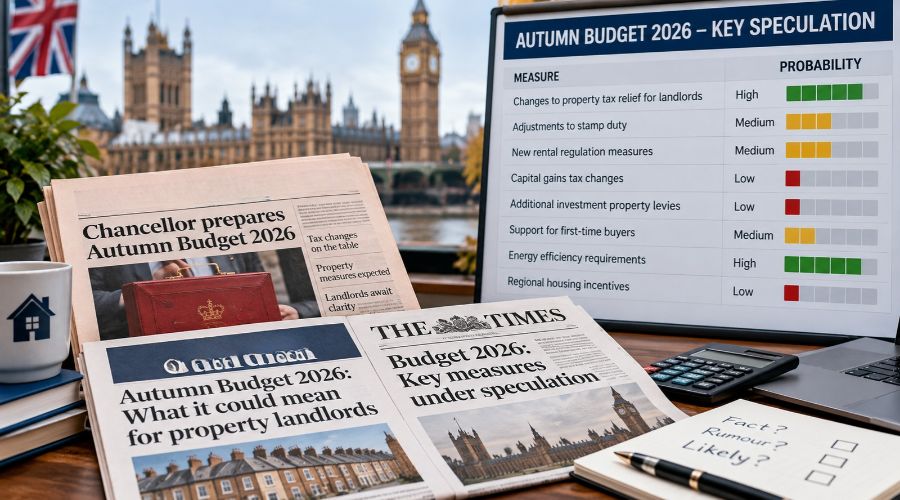
Budget predictions landlords 2026 - the credible speculation, graded
Budget predictions landlords 2026 coverage clusters around a short list, and grading it by plausibility beats treating every headline equally. Most credible: extended freezes to income-tax thresholds (the quiet revenue-raiser every recent Budget has reached for) and continued tightening around reliefs. Perennially discussed: CGT rates moving closer to income-tax rates and the £3,000 annual exempt amount staying frozen - material for anyone planning disposals, which is why sellers already in motion tend to complete rather than wait. Director-relevant: dividend-tax rates or the £500 allowance tightening, and a possible cap on salary-sacrifice NIC relief. Wildcard: structural property-tax reform - periodic reports of SDLT being rethought resurface each cycle; treat as direction-of-travel noise until a consultation document exists.
CGT IHT changes budget watch - what movement would actually mean
The cgt iht changes budget watch matters because both taxes bite at transaction moments you partly control. On CGT: residential property gains currently pay 18%/24%; any move toward income-tax alignment would reprice every exit on a landlord’s five-year plan - the rational response to uncertainty is not fire-sales but sequencing: disposals you had already decided on complete sooner rather than later, disposals you hadn’t stay undecided. On IHT: the nil-rate bands remain frozen (£325,000 since 2009), pensions enter IHT scope from April 2027 under already-announced reform, and reliefs for business and agricultural property were tightened from this April - estate-heavy portfolio landlords should be mid-conversation with advisers regardless of November. None of this is tax advice; all of it is agenda-setting for the professional who gives you some.
Business tax measures autumn budget - the SME watchlist
The business tax measures autumn budget coverage affects every trading client we fund - these are the lines worth watching on the day.
Watch for:
- Thresholds and freezes - extended income-tax and NIC threshold freezes are the bookies’ favourite: invisible on the day, expensive by 2030
- Dividend taxation - rates or the £500 allowance: the salary-vs-dividend split gets re-run in every accountant’s office the morning after
- Salary-sacrifice pensions - a cap on NIC relief would blunt the best legal offset to the 15% employer rate
- Capital allowances - full expensing’s permanence has survived so far; any tightening changes kit-purchase timing (asset finance guide)
- Fuel duty and VAT thresholds - the £90k VAT line and fuel-duty freeze are annual cliffhangers with real cash-flow consequences
- What’s probably safe - headline corporation tax (capped at 25% by the government’s own roadmap) and employer NIC (raised only last year)
How to prepare without panicking - the pre-Budget playbook
The same discipline every year: complete what’s in flight - transactions mid-stream (sales, purchases, refinances) are usually worth finishing under known rules, and SDLT changes in particular have historic form for taking effect at midnight; use the allowances you were using anyway - ISA room, the CGT exempt amount on planned disposals, pension contributions within current rules; stress-test, don’t restructure - run your portfolio’s numbers under the rumoured scenarios so Budget day is arithmetic, not shock; and keep finance ready - post-Budget windows often produce motivated sellers and repricing, and the buyers who move are the ones whose bridging or mortgage capacity was arranged in October. We will publish the what-it-actually-said follow-up within days of the speech; this page is the before, that one will be the after.
The Money Pilot position - finance planning beats tax guessing
Our lane is the funding side: whatever November brings, portfolios built on sensible leverage, fixed-vs-variable decisions made deliberately (see our base rate companion guide), and facilities arranged before they’re urgent ride Budget cycles instead of being ridden by them. For the tax lines above, your accountant is the professional; for the borrowing that funds the plan either side of the speech - 200+ lenders, zero broker fees, call 020 4634 8617. FCA regulated (FRN: 968705).